
Customer acquisition
Identifying, approaching and qualifying industrial customers — with the technical argument that matters to them, in their language.
Customers, partners and contracts — developed on the ground, not from a slide deck
AETEK develops industrial business in Kazakhstan, Uzbekistan and the wider region for European companies: qualified customers, capable partners and a pipeline that keeps producing after the first project.
It is not a market study, and it is not a list of contacts. It is the commercial work between your organisation and a market that does not answer cold emails.
In practice it means finding the plants and groups that have a real need for your technology, reaching the people who decide, being in the room when requirements are discussed, and following the opportunity through offers, clarification and negotiation until something is signed. Then doing it again, with the next one.
European suppliers usually fail in Central Asia for one of two reasons: they appear once, at a trade fair, and disappear for a year — or they hand the market to a distributor who already sells three competing brands. Both look like market presence on paper. Neither builds a business.
Identifying, approaching and qualifying industrial customers — with the technical argument that matters to them, in their language.
Finding partners who can sell and service your product — and checking them honestly before you sign anything exclusive.
Projects, tenders and modernisation plans tracked from first signal to decision, so nothing dies quietly in a mailbox.
Commercial terms that work in the region: prices, payment, delivery, warranty and the service expectations behind them.
Turning a first delivery into a relationship: follow-up, service coordination and the next project with the same customer.
Visibility where it counts: references, industry events, and a presence that makes your name familiar before the enquiry arrives.
What usually happens to the number of live opportunities over two years — with trade fairs alone, and with business development that keeps going between them.
Schematic illustration, not measured data.
Most programmes start in Kazakhstan or Uzbekistan and extend from there when the product and the projects justify it.
Mining and metals, oil and gas, energy and infrastructure — usually the first market that justifies a systematic approach.
Machinery, textiles, food processing and chemicals, with modernisation programmes and a strong appetite for European technology.
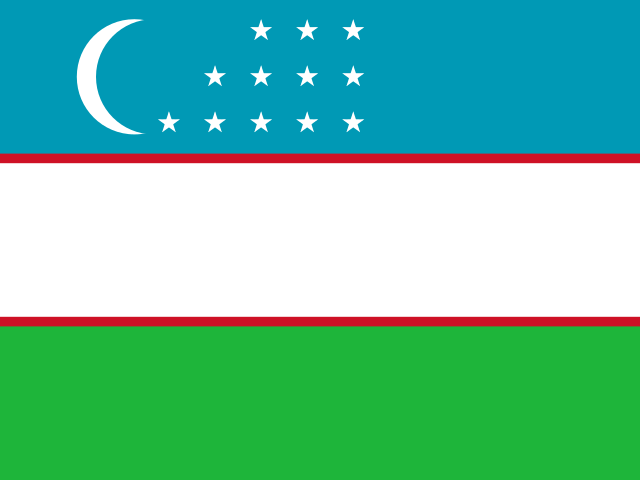
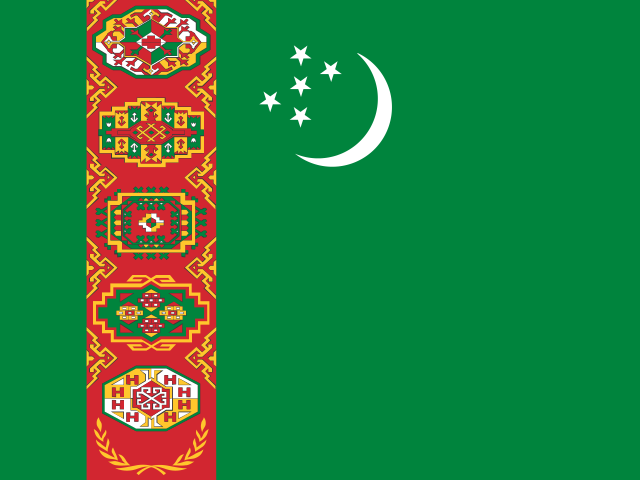
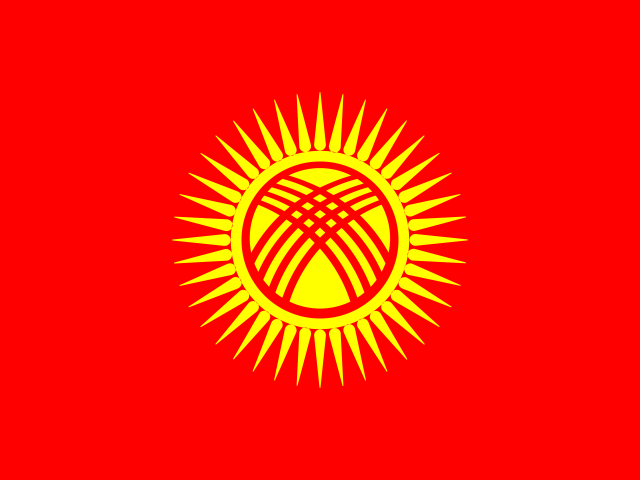
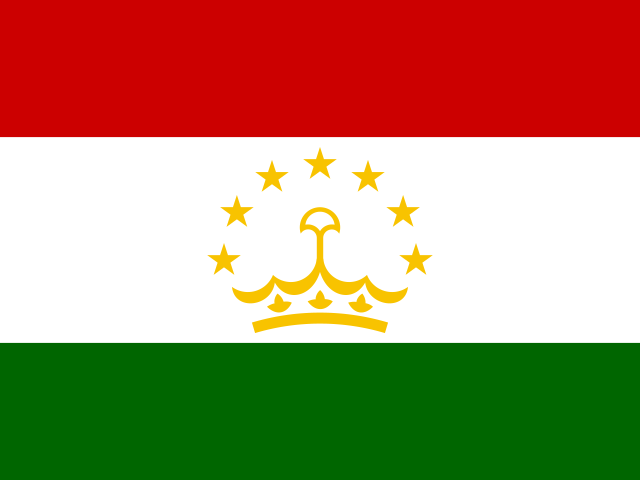
Turkmenistan, Kyrgyzstan and Tajikistan are covered from the same corridor, with representatives in Almaty, Tashkent and Dubai and an office in Kazan.
AETEK combines more than two decades of international B2B experience with people who are actually in these markets.
Answer five short questions about your situation. The bars show which of the three ways to start fits best, and change with every answer.
A first orientation, not advice. Before anything is recommended, we look at your case in detail.
A consultancy delivers analysis and recommendations. We do the commercial work: the calls, the meetings, the offers and the follow-up — and we are measured on opportunities, not on reports.
Yes. We do not develop two competing products in the same segment. That is the only way the work stays credible with customers and with you.
A fit check, then a market and opportunity assessment, then continuous business development activities on an agreed scope. Details are on the BDaaS page.
Yes. The same network works in reverse: identifying and qualifying suppliers, coordinating specifications, and handling the commercial process for industrial procurement.
Choosing a partner? Strategic partnerships in Central Asia
Tell us what you build. We will come back with an honest first assessment of the fit.
Business Development — Central Asia
From market potential to business.
Tell us which technology you want to develop in the region and what has been tried so far — including what did not work.
Prefer email? info@aetek.eu
Amtsgericht Aschaffenburg
HRB 14157
DE288091462
DE644795536634916
AETEK® is a registered word mark of AETEK GmbH, German Patent and Trade Mark Office (DPMA), Reg. No. 30 2023 202 928 (expires 31 Jan. 2033). View registration certificate (PDF)
Legal Entity Identifier (LEI) 391200MNLJ2E0R0I6V98, issued 16 Aug. 2021 by Bundesanzeiger Verlag. View in GLEIF register
AETEK company flyer 2026 – Business Development as a Service, in English. View flyer