







From Waste Heat to Urban Infrastructure
Alatau City has a rare infrastructure advantage: major parts of its future energy, industrial and urban systems are still being designed. This creates an opportunity that mature cities usually encounter too late to consider heat not only as something that must be generated, but also as an energy flow that can be recovered, upgraded, stored and exchanged between different parts of the city. A possible Alatau City Thermal Loop could connect data centres, industrial facilities, commercial buildings, residential districts and other low-temperature heat sources through an integrated thermal infrastructure.
The concept would not replace Alatau's planned heat supply system. It would complement it by recovering energy that would otherwise be rejected into the environment.
Alatau already has the foundation
Kazakhstan's official General Plan demonstrates the scale of the future thermal system. The projected heat load from new residential and public development increases from 1,479 Gcal/h in 2030 to 3,164 Gcal/h in 2040 and 5,114 Gcal/h by 2050. The plan envisages extensive centralised heat supply. By 2050, it provides for:
- ten new cogeneration heat sources with a combined thermal capacity of 3,600 Gcal/h;
- heat pumps with 500 Gcal/h of installed thermal capacity;
- approximately 147.5 km of main heating networks.
The General Plan already contains an important technological principle: in the Green District, heat pumps are proposed using the water of the Kapshagay Reservoir as a source of low-potential heat. At the same time, new industrial facilities are currently expected to use autonomous natural-gas-based heat sources. This creates an interesting engineering question: Could some future industrial and digital assets become heat suppliers as well as energy consumers?
The city is adding new potential heat sources
Alatau's investment portfolio has expanded to 67 projects worth approximately $6.9 billion. Manufacturing and logistics facilities are already being developed, while CIMC is working on projects involving logistics, data centres and digital infrastructure. The combination is important. Data centres convert a large share of their electricity input into heat that must continuously be removed through cooling systems. Industrial facilities can generate process and cooling heat at different temperature levels. Wastewater, refrigeration systems and large commercial properties may provide additional recoverable thermal streams. In a conventional infrastructure model, these assets are treated independently: electricity in → cooling → heat rejected. A Thermal Loop changes that relationship: electricity / process → recoverable heat → heat pump → thermal network → useful demand. Scandinavia shows how this can work at scale. This is no longer an experimental concept.
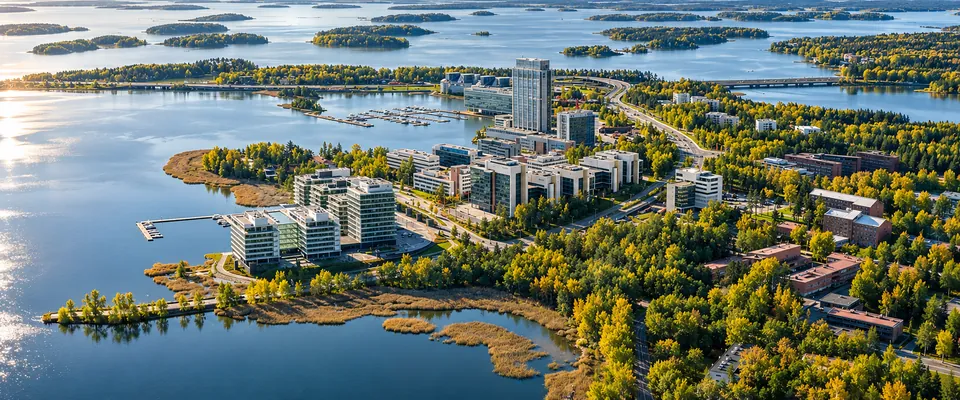
Espoo, Finland
Microsoft and Fortum are developing one of the world's largest data-centre heat-recovery systems in the Helsinki metropolitan region. Fortum will capture the excess heat generated by Microsoft's data centres, upgrade it through large-scale heat pumps and feed it into the district-heating network serving Espoo, Kauniainen and Kirkkonummi. At full scale, the recovered heat is expected to cover approximately 40% of the district-heating demand of around 250,000 users.
One particularly relevant lesson for Alatau is that the integration was considered before the facilities were built. Data-centre locations and heat infrastructure were planned together so that the thermal energy could be efficiently transferred into the existing network.
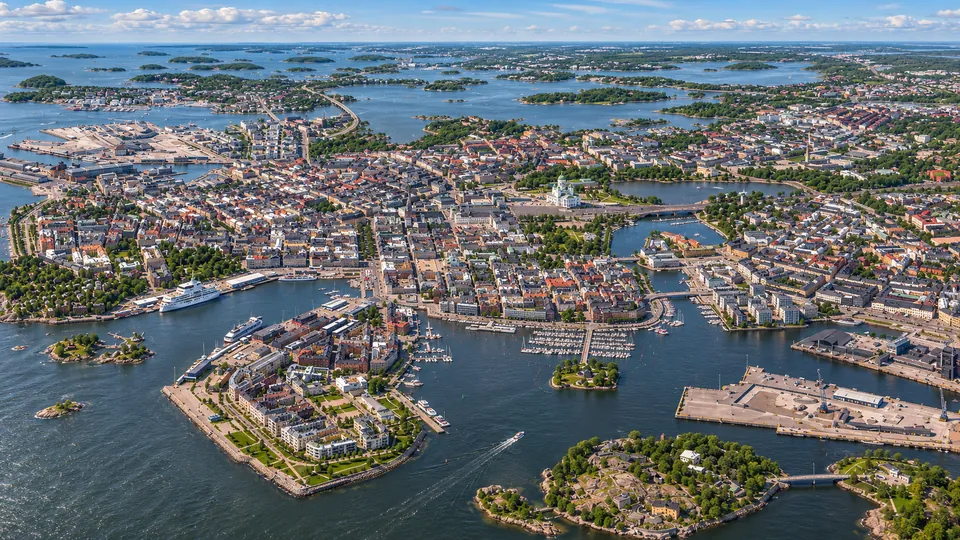
Helsinki, Finland
Helsinki is already moving from individual projects toward a distributed heat-recovery system. Helen reports that 11 data centres were connected to its district-heating system in 2026. A newly agreed OnZero data-centre project could eventually deliver more than 500,000 MWh of recovered heat annually, equivalent to the heating demand of approximately 70,000 apartments.
The technical architecture is straightforward: data-centre cooling → heat recovery → heat pumps → required temperature level → district-heating network. Helen also operates models in which either the utility or the data-centre operator invests in the heat-recovery equipment.
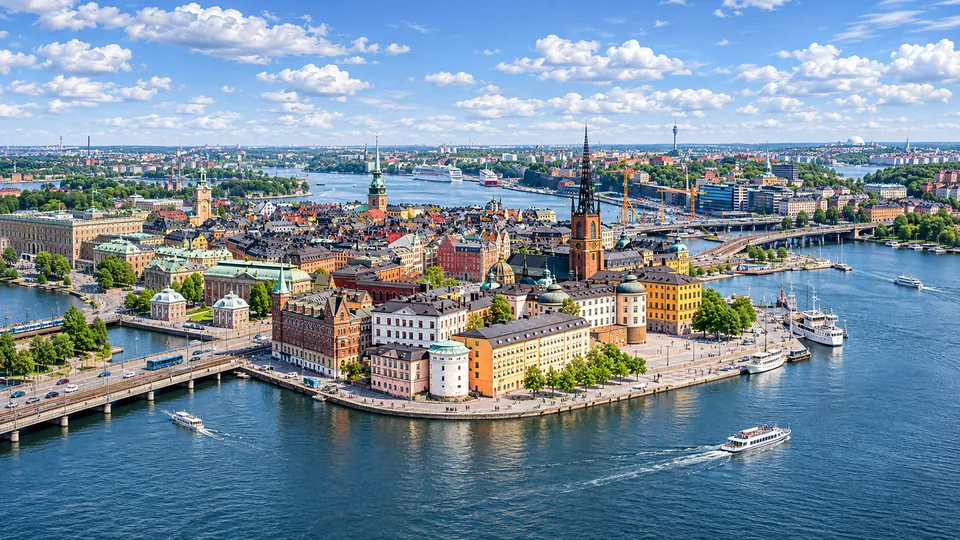
Stockholm, Sweden
Stockholm goes one step further. Through Open District Heating, Stockholm Exergi effectively operates a marketplace for excess heat. Data centres, supermarkets and industrial businesses located close to the network can supply heat to the city and receive payment for it. Stockholm Exergi states that approximately 11,000 apartments are already heated with recovered excess heat. The system therefore creates an economic relationship: waste heat producer → heat supplier → network operator → urban heat consumer.
Stockholm is also developing lower-temperature district-heating architecture because lower system temperatures allow additional sources of low-grade heat to be integrated. This is particularly relevant to a city such as Alatau that can still design its network architecture before full-scale urbanisation.
What could an Alatau Thermal Loop look like?
A practical concept would not begin with a citywide network. It could start with one defined development corridor or district containing several complementary assets. For example:
- Data Centre
- 30–50°C excess heat
- Heat Recovery / Large-Scale Heat Pump
- 60–90°C useful thermal energy
- Thermal Loop
- Residential / Hotel / Hospital / Offices / Industrial Consumers
A second industrial source could feed the same network. Thermal storage could absorb differences between supply and demand. Digital energy management could continuously optimise heat sources, storage, electricity prices and consumer demand. Over time, additional assets could connect to the system. The result would be a multi-source thermal infrastructure platform, rather than a single-purpose heating plant.
The first project should be a Thermal Resource Map
Before selecting technology providers, Alatau would need to understand its future thermal geography. A professional pre-feasibility phase could map:
Heat sources:
- data centres;
- industrial cooling;
- process heat;
- wastewater;
- commercial refrigeration.
Heat demand:
- residential development;
- hotels;
- hospitals;
- universities;
- offices;
- industrial processes.
Technical parameters:
- source temperature;
- available thermal power;
- annual load profile;
- distance between sources and users;
- required network temperatures;
- cooling demand;
- thermal-storage potential.
This would identify the locations where a Thermal Loop could generate both economic and infrastructure value.
Why early planning matters
Alatau's infrastructure programme is already substantial. Kazakhstan plans major new power, water, gas, transport and utility infrastructure, while electricity demand in the wider development area is expected to rise sharply toward 2050. Once industrial plants, data centres and urban districts are constructed with independent energy systems, connecting them later becomes more difficult and expensive. Today, however, Alatau can still reserve: utility corridors, connection points, heat-exchange stations, network interfaces and technical standards. This is precisely the advantage of building a new city.
The most advanced infrastructure decision may therefore not be another individual generation asset. It may be to ensure that future assets can exchange energy with each other.
From technology procurement to system architecture
An Alatau City Thermal Loop would require expertise across several technology fields: industrial heat recovery, large-scale heat pumps, district heating and cooling, thermal storage, pumps, heat exchangers, piping systems, instrumentation, SCADA and digital energy optimisation. Europe, particularly Northern Europe, has substantial practical experience in these technologies and in the commercial models required to connect private heat producers to public or private energy networks. The challenge is therefore not simply to identify a heat-pump supplier. It is to define the project architecture first:
Where is the resource? Where is the demand? Who owns the heat? Who operates the network? Who invests? Who buys the recovered energy? Which technology configuration creates the best business case?
Only then should technology and financing partners be selected.
AETEK perspective
We see particular value in this early phase of infrastructure development, where an emerging system need can be translated into a technically structured project and subsequently matched with suitable European engineering, technology and financing partners. For Alatau City, the opportunity may be especially timely. The city already plans heat pumps, extensive thermal networks, new industrial development and digital infrastructure. The individual components exist. The next question is whether connecting some of them could create an additional infrastructure asset:
A future city does not only need new sources of energy. It can also learn to use the energy it already has.
Heat Recovery × Data Centres × Industry × Heat Pumps × Thermal Storage × District Energy × Digital Optimisation