

AETEK’s current focus on industrial business development between Europe and Central Asia did not begin with a new business plan. It is the result of more than two decades of building companies, entering markets, developing supplier relationships and learning how industrial business actually grows across borders.
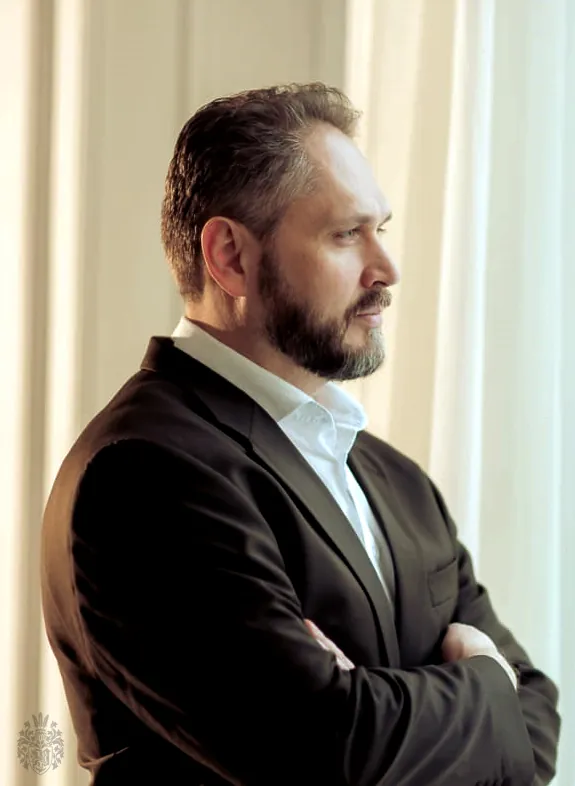
When AETEK was repositioned toward Central Asia, it may have looked from the outside like a new strategic direction. In reality, it was much closer to a return to the core. The history behind AETEK reaches back to the late 1990s and is closely connected to the professional path of its founder, Artur R. Pamin. Over the years, the company names, locations and legal structures changed. The underlying activity, however, remained remarkably consistent: identifying business opportunities, connecting industrial suppliers with markets, building local structures and developing relationships until they became real business.
The first entrepreneurial steps
The starting point dates back to 1998, with the acquisition of the corporate vehicle of Thomas Duchnicki GmbH in Berlin (Thomas Duchnicki / WaWiSys (WarenWirtschaftsSysteme) GmbH, in Berlin, Gesellschaft mit beschränkter Haftung, HRB 53693 Amtsgericht Berlin Charlottenburg). At that stage, there was no concept called Business Development as a Service and no defined focus on Central Asia. What already existed, however, was the entrepreneurial idea of working independently across markets rather than remaining confined to one organisation, one territory or one conventional sales structure.
In 2002, this direction became more explicit with the establishment of PWT – Pamin Worldwide Trading in Aschaffenburg, Bavaria. The name itself reflected the underlying idea: international business was not understood as occasional export activity, but as the ability to connect supply and demand across borders. That principle would remain central throughout the following decades.
Moving closer to the market
A major step followed in 2008 with the establishment of PAMEL LLC – Памин Элемент ООО in Domodedovo, Russian Federation (Памэл, ООО, ИНН 5009067009 / КПП 500901001). This marked a shift from working with foreign markets from Germany toward building structures inside the markets themselves. The distinction is important. Exporting into a country and developing business inside a country are not the same thing. The latter requires an understanding of customers, decision-making structures, technical expectations, commercial behaviour, local networks and the often considerable distance between an initial contact and an actual order. This experience became increasingly important as activities moved deeper into industrial B2B markets.
In 2010, the involvement in ООО АЕТ-Техника added another dimension. The company operated in the field of industrial technology and represented European equipment and engineering solutions in Russian-speaking markets. The historical activities around AET-Technika already contained many elements that today would be described as industrial business development: representing technology suppliers, explaining technically demanding products, identifying potential users, developing customer relationships and bridging the gap between European manufacturers and industrial customers in another business environment.
In January 2013, AETEK GmbH was founded in Germany. This was not a departure from the previous activities. It was their consolidation. AETEK was created around industrial trade and procurement and increasingly became a platform for connecting European industrial technology with customers and projects in Russian-speaking markets. One year later, in 2014, this structure was extended through the establishment and participation in LLC АЕТЕК in Chimky, Moscow. The business model was becoming increasingly clear: Europe provided technology, engineering capability and specialised industrial products. The markets to the east provided industrial demand, projects and opportunities. Between the two stood the need for someone who understood both sides. Someone had to identify the opportunity, understand the customer, qualify the requirement, find the right supplier, translate commercial and technical expectations and accompany the process long enough for an actual business relationship to emerge. That intermediary function would later become one of the foundations of the modern AETEK model.
Building local industrial business
The next major step followed in 2015 with the establishment of URARUS LLC in Kazan, Republic Tatarstan, R.F. (see urar.us). URARUS represented a more advanced stage of the same development philosophy. Rather than simply exporting equipment, the objective was to build an operating market structure around specialised European industrial technology.
In 2017, an additional URARUS office was opened in Moscow. By then, the activities had moved far beyond conventional international trading. They included market development, representation, technical-commercial and technical-operative coordination and service, customer acquisition, project development, procurement and the continuous development of industrial relationships. This period provided one of the most important lessons that continues to shape AETEK today: Markets are rarely built by individual transactions. They are built through continuity. A manufacturer may have an excellent product. A potential customer may have a genuine requirement. Yet business still does not automatically happen. There is usually a long chain in between. This is precisely the space in which AETEK has operated for many years, even before that process was formally described as Business Development as a Service.
Central Asia becomes part of the business
From around 2018, industrial supplies and consumables were increasingly delivered not only into the established Russian-speaking markets but also to customers in Central Asia. At that time, Central Asia was still only one part of a wider regional business environment. Nevertheless, the foundations of today’s AETEK direction were already becoming visible. Kazakhstan, Uzbekistan and the neighbouring markets combined substantial industrial demand with a growing need for international technology, equipment, engineering and reliable cross-border business relationships. The region also demonstrated something that AETEK had already learned elsewhere: successful industrial business development requires more than finding a distributor or responding to an occasional request for quotation. Understanding the local industrial landscape matters. So do decision-making structures, project cycles, procurement processes, relationships and the ability to remain engaged over time.
A period of transition
The environment changed fundamentally after 2022. URARUS was moved into standby mode, and the previous regional business architecture could no longer simply continue as before. At first sight, this could be interpreted as an interruption. From today’s perspective, it was more accurately a transition. The accumulated experience remained: decades of industrial sales, market development, procurement, company building, customer relationships and work across different business cultures. What changed was the geography and the strategic framework in which that experience would be applied.
AETEK returns with a clearer focus. Beginning in 2025, AETEK entered a new phase. Central Asia moved from being one market among several to becoming the central strategic region. At the same time, the business model was refined. The objective was no longer to recreate a traditional representation structure or simply to act as an intermediary for individual transactions. The accumulated experience pointed toward a broader role. Today, AETEK develops business between European industrial companies and Central Asia through a combination of Market Intelligence → Market Access → Opportunity Development → Procurement → Execution → Market Building. This approach increasingly takes the form of Business Development as a Service – BDaaS.
For European companies, AETEK can provide a way to explore and develop Central Asian markets without immediately building their own local organisation. For Central Asian industrial companies and projects, AETEK can provide structured access to European technology, specialised suppliers, engineering capabilities and industrial partners. The emphasis is not on generating contacts. It is on developing business. Seen in this context, the present AETEK is not a new company trying to enter Central Asia. It is the latest stage of a business-development path that has been evolving since the late 1990s.
The next chapter
Central Asia is entering a period in which industrial development, critical raw materials, infrastructure, localisation and technology cooperation are becoming very important. European companies are looking for new markets and more resilient international partnerships. At the same time, Central Asian companies are increasingly looking beyond the purchase of individual imported products toward technology partnerships, local value creation and long-term industrial cooperation. For AETEK, these developments do not represent a completely new field. They bring together many of the elements that have shaped the company’s history from the beginning. What started with international trade evolved into market representation. Market representation evolved into business development. Business development evolved into market building. And today, those experiences come together in one clear direction: AETEK connects European industrial technology with Central Asia — and develops the relationships, opportunities and structures required to turn that connection into sustainable business.
- 1998
- 2002
- 2008
- 2010
- 2013
- 2014
- 2015
- 2017
- 2018
- 2022
- 2025
- now