

AETEK Insights
Европа менен Борбор Азиянын ортосундагы рыноктон байкоолор: көргөзмөлөр, өнөр жай өнүгүүсү, технологиялар — жана AETEK тарыхы.
Макалалар англис тилинде жарыяланат.
From Memorandum to Industrial Projects: Kazakhstan and Bavaria
This is another important step in strengthening the economic bridge between Kazakhstan and Germany. The direct involvement of Bayern International can be particularly valuable for bringing more Bavarian SMEs into concrete cooperation with Kazakhstan. Energy, raw materials, environmental technologies, agriculture and industrial technologies offer a broad and highly relevant field for joint projects.
The real opportunity now lies in translating institutional agreements into company-level cooperation. For many German industrial companies, Kazakhstan is becoming increasingly interesting not only as an export market, but as a location for long-term partnerships and local value creation. At the same time, successful market development will require local understanding, reliable partners and sustained engagement.
Structures such as this memorandum can help reduce barriers and accelerate access for companies on both sides. The next step should be clear: turning this new channel into tangible industrial projects.
Source: the cooperation memorandum between KAZAKH INVEST and Bayern International, as reported by Trend (trend.az/casia/kazakhstan/4230224.html)
Critical Minerals: Central Asia is moving beyond the resource story
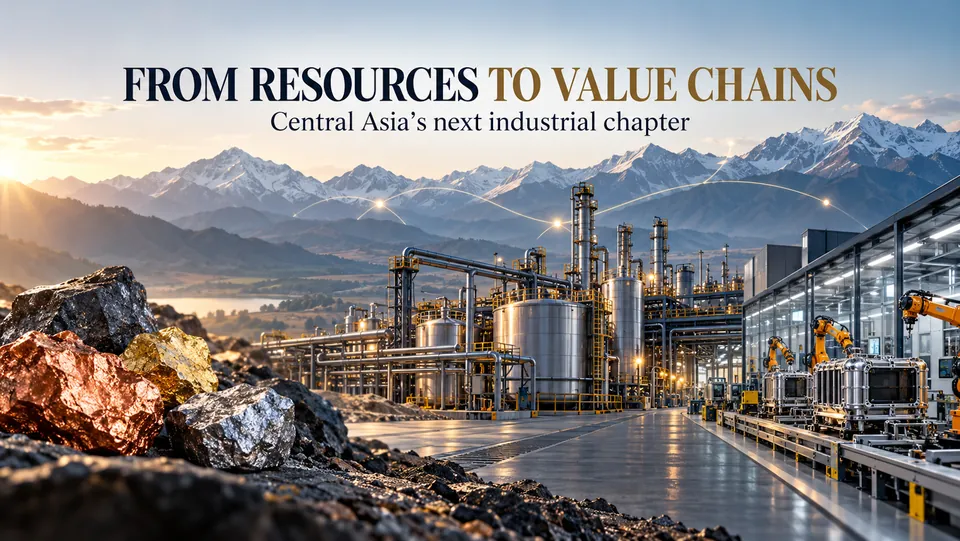
For many years, Central Asia has been discussed primarily in terms of its natural resources. Oil, gas, uranium, metals and minerals have always been part of the region’s economic relevance. What is becoming increasingly interesting, however, is that the discussion is beginning to move beyond the question of what can be extracted and exported. The more important question is becoming: what part of the industrial value chain can remain in the region?
A number of developments over the past few weeks illustrate this shift particularly well.
On 17 September, Uzbekistan Technological Metals Complex — TMK — held a roadshow in Berlin focused on critical minerals and industrial cooperation. According to TMK, representatives of around 20 German industrial companies, end users and financial institutions participated. What caught my attention was not simply the size of the project portfolio presented — more than 140 investment projects with a total value of approximately USD 4.2 billion — but the way the objective was formulated. The stated intention is not merely to increase exports of raw materials or semi-finished products. TMK is looking to attract technologies and manufacturing expertise, localise them in Uzbekistan and develop higher-value production around the country's mineral resources. That is a fundamentally different industrial proposition.
A similar direction was visible only one day earlier on a much broader regional level. At the first Korea–Central Asia summit, South Korea and the five Central Asian countries placed critical minerals, energy and supply chains at the centre of their discussions. More than 70 agreements and memoranda were concluded across areas including mining, energy, infrastructure, technology and investment. Particularly noteworthy was South Korea's emphasis on cooperation extending beyond the supply of raw materials towards the entire critical-minerals value chain — from exploration through processing to final manufacturing.
The bilateral talks with Kazakhstan showed the same pattern. Cooperation was discussed not only around mineral supplies, but also around nuclear energy, science, technology and the development of mineral resources using Korean industrial capabilities. These developments should not be seen in isolation. Europe has been moving in a similar direction for some time. The EU's strategic partnership with Kazakhstan explicitly covers raw materials, refined materials, batteries and renewable hydrogen value chains. With Uzbekistan, the EU signed a memorandum on critical raw materials in 2024, with the stated objective of developing sustainable local value chains alongside secure access to strategically important materials. International Partnerships
Taken together, a larger picture begins to emerge. Central Asia is increasingly becoming relevant not simply because it possesses resources, but because governments and industrial institutions in the region are trying to build industrial capability around those resources. And this changes the opportunity for European industrial companies. If a country primarily exports raw materials, the commercial opportunity is concentrated around extraction, mining equipment and logistics. Once processing, refining and manufacturing are increasingly localised, a much broader industrial ecosystem begins to develop around them. That ecosystem requires process technologies, pumps and valves, filtration, automation, measurement technology, engineering, water treatment, energy infrastructure, specialised materials, maintenance, industrial services and many other capabilities that European industry has developed over decades. But there is another important point. Having the technology does not automatically mean participating in these emerging value chains. The projects are becoming larger, the stakeholder structures more complex and the expectation of local industrial participation stronger. A company therefore has to understand not only where demand exists, but how the emerging industrial structure actually works, which projects are real, who the relevant actors are, which form of cooperation is appropriate and where its own technology genuinely fits. This is where I believe the discussion about market entry has to evolve.
For many companies, international expansion is still thought of primarily as an export question: find a distributor, identify customers, participate in a trade fair and sell equipment. That will continue to work in many situations. But the developments we are currently seeing in Central Asia increasingly point towards something broader. For European companies, the opportunity may therefore no longer be simply to sell into Central Asia, but to become part of the industrial development taking place there. And for Central Asian companies, the opposite question becomes equally important: how can local resources, manufacturing capability and new industrial products be connected with European technology, customers, partners and markets?
This is precisely why I increasingly see the economic relationship between Europe and Central Asia as a two-way industrial development process, rather than a traditional one-directional export corridor. The raw materials may provide the starting point. The much larger opportunity could lie in what is built around them.
At AETEK, this is the perspective from which we look at industrial business development between Europe and Central Asia: not only identifying where demand exists, but understanding where new value chains are forming and how companies can become part of them.
From resources to value chains. From market potential to business.
Three Days in Almaty
Trade fairs are useful for seeing technologies. They become more interesting when they help us understand where a market is actually moving.
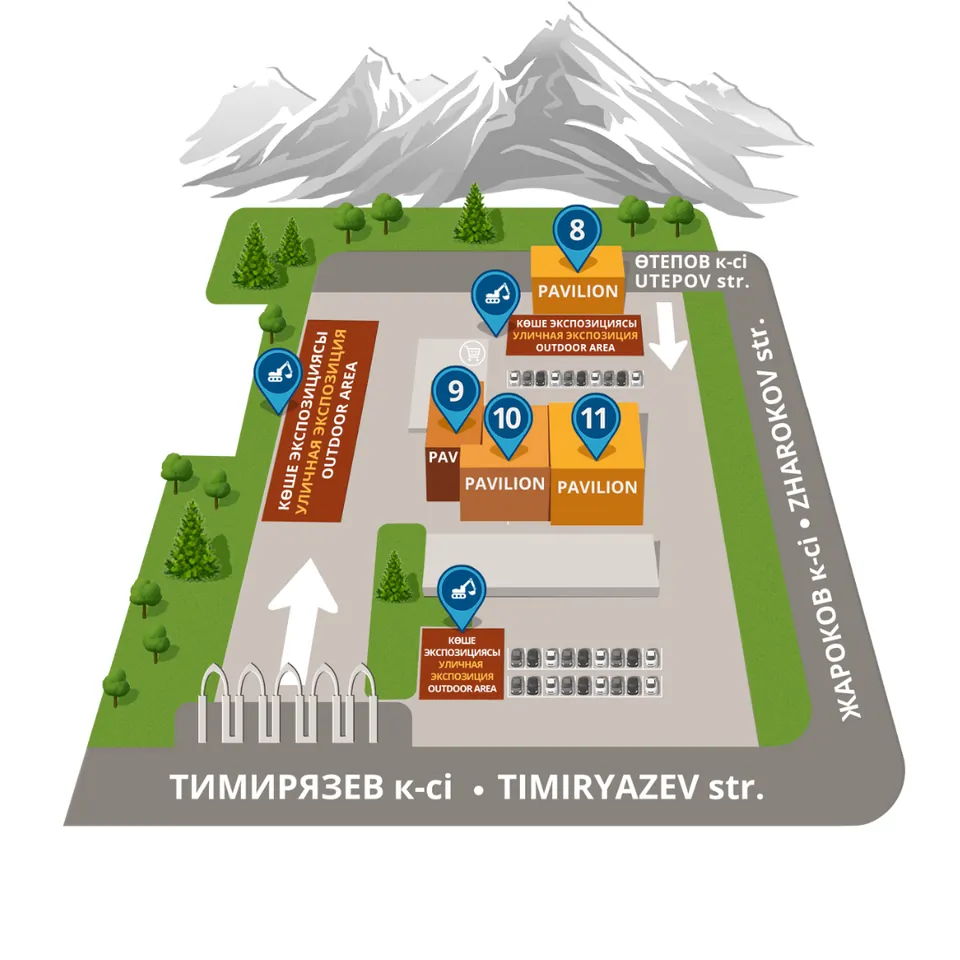
From 16 to 18 September 2026, Mining & Metals Central Asia (miningworld.kz/en) brought the mining and metallurgical industry together in Almaty. This year’s event attracted 533 companies from 30 countries and more than 7,000 industry professionals. Germany alone was represented by 43 companies in the German Pavilion.
For AETEK, however, the most relevant part of the exhibition was not its size. It was the opportunity to compare what we had been observing from Germany with what was happening directly on the ground. In the weeks before the exhibition, we had systematically analysed participating companies, technologies and potential points of connection with industrial developments in Kazakhstan and the wider Central Asian region. During all three exhibition days, Mr. A. Kair supported AETEK locally in Almaty, meeting companies, discussing their regional activities and testing where genuine interest in further market development existed. The conversations produced new contacts, follow-up opportunities and, perhaps more importantly, a clearer picture of what European industrial companies are looking for in the region. Several discussions quickly moved beyond products. Companies wanted to understand where concrete projects exist, how potential customers can be identified, who the relevant decision-makers are and whether initial contacts can be developed into a real commercial pipeline. This distinction matters.
A trade fair can create visibility and introductions. But entering a market requires continuity after the exhibition: qualifying demand, understanding projects, identifying stakeholders and staying involved long enough to turn an initial conversation into a business opportunity. The three days in Almaty also reinforced another observation. Central Asia’s industrial story is becoming broader. Mining remains fundamental, but the discussion increasingly extends into processing, infrastructure, equipment modernisation, local production, technology cooperation and the development of more complete industrial value chains. The official programme itself reflected this transition, covering topics from critical minerals to processing technologies and digital mining.
For AETEK, the exhibition therefore served two purposes. It created new relationships between European technology providers and our developing Central Asian network. But it also provided another piece of evidence for a larger development that we have been observing across Kazakhstan, Uzbekistan and the wider region: Central Asia is beginning to ask not only what can be extracted from its resource base, but what industrial value can be created around it. That question leads directly to one of the most important topics currently shaping the region. Critical minerals — and the gradual shift from a resource story toward an industrial value-chain story.
The Story Behind AETEK
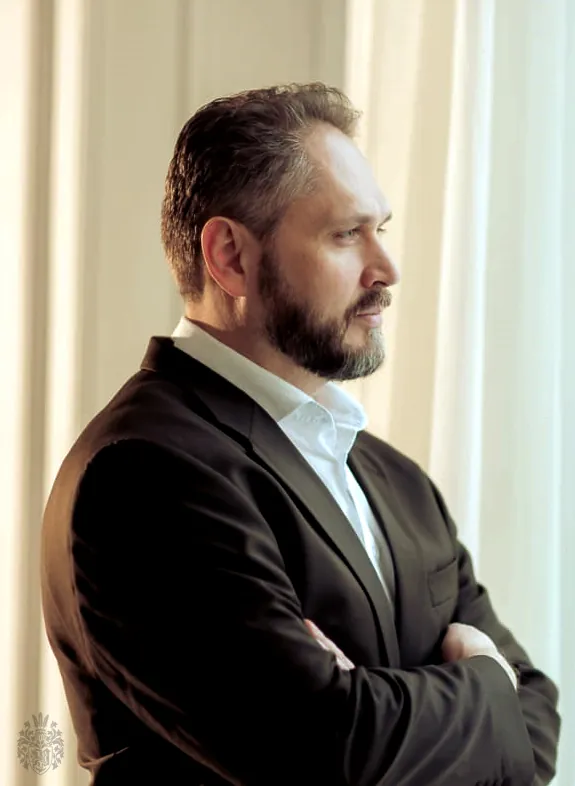
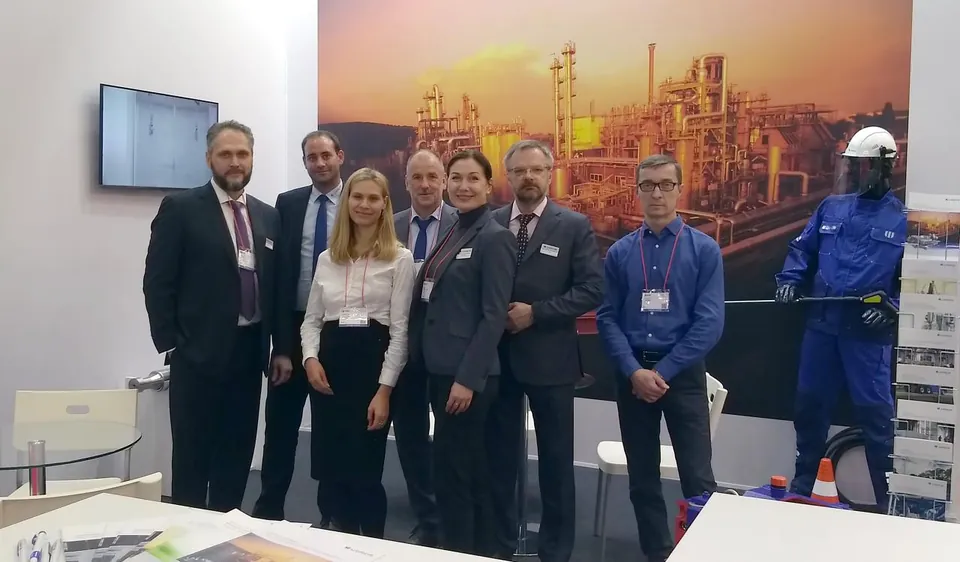
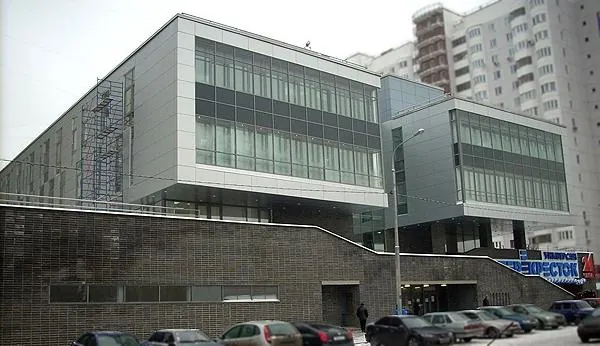
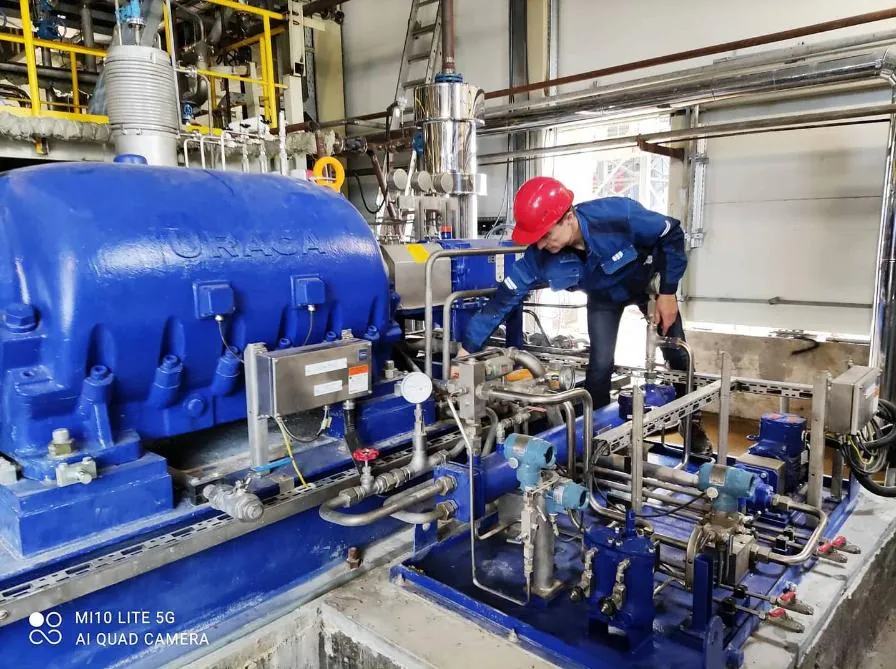
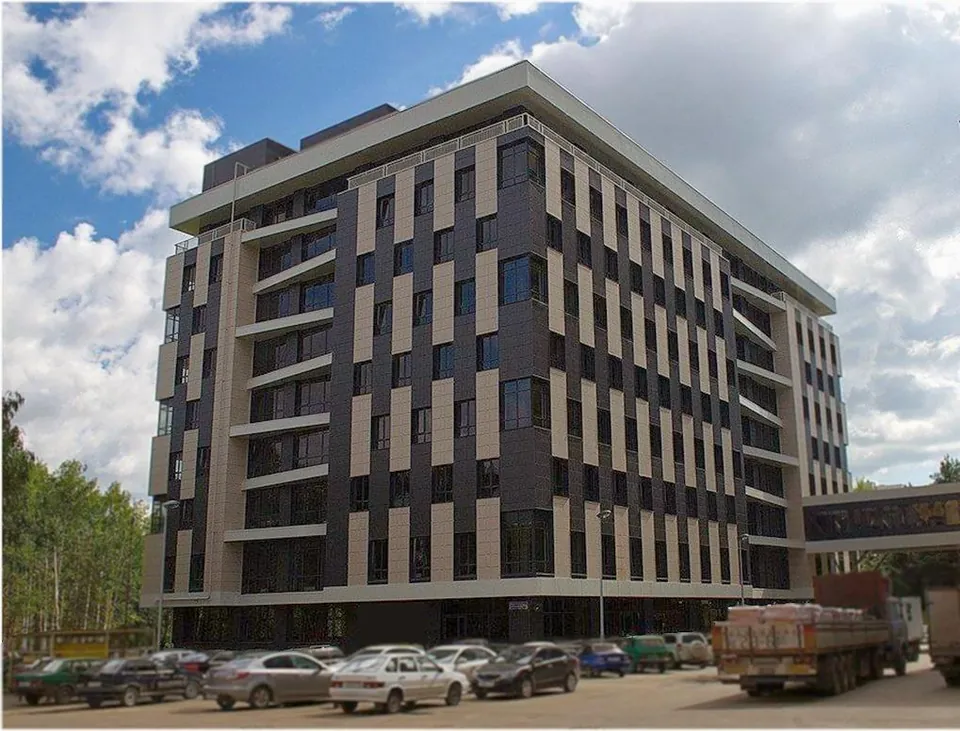
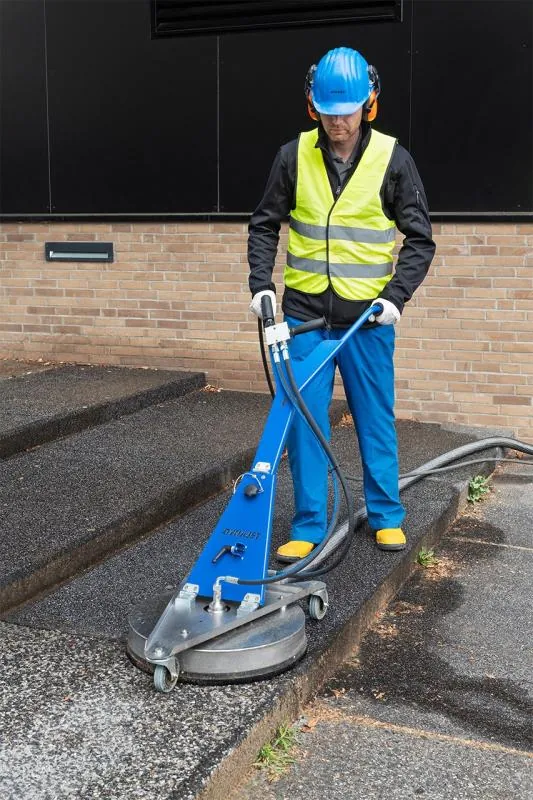
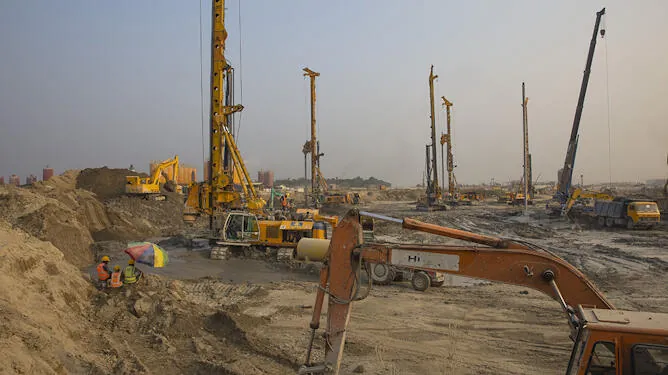
AETEK’s current focus on industrial business development between Europe and Central Asia did not begin with a new business plan. It is the result of more than two decades of building companies, entering markets, developing supplier relationships and learning how industrial business actually grows across borders.
When AETEK was repositioned toward Central Asia, it may have looked from the outside like a new strategic direction. In reality, it was much closer to a return to the core. The history behind AETEK reaches back to the late 1990s and is closely connected to the professional path of its founder, Artur R. Pamin. Over the years, the company names, locations and legal structures changed. The underlying activity, however, remained remarkably consistent: identifying business opportunities, connecting industrial suppliers with markets, building local structures and developing relationships until they became real business.
The first entrepreneurial steps
The starting point dates back to 1998, with the acquisition of the corporate vehicle of Thomas Duchnicki GmbH in Berlin (Thomas Duchnicki / WaWiSys (WarenWirtschaftsSysteme) GmbH, in Berlin, Gesellschaft mit beschränkter Haftung, HRB 53693 Amtsgericht Berlin Charlottenburg). At that stage, there was no concept called Business Development as a Service and no defined focus on Central Asia. What already existed, however, was the entrepreneurial idea of working independently across markets rather than remaining confined to one organisation, one territory or one conventional sales structure.
In 2002, this direction became more explicit with the establishment of PWT – Pamin Worldwide Trading in Aschaffenburg, Bavaria. The name itself reflected the underlying idea: international business was not understood as occasional export activity, but as the ability to connect supply and demand across borders. That principle would remain central throughout the following decades.
Moving closer to the market
A major step followed in 2008 with the establishment of PAMEL LLC – Памин Элемент ООО in Domodedovo, Russian Federation (Памэл, ООО, ИНН 5009067009 / КПП 500901001). This marked a shift from working with foreign markets from Germany toward building structures inside the markets themselves. The distinction is important. Exporting into a country and developing business inside a country are not the same thing. The latter requires an understanding of customers, decision-making structures, technical expectations, commercial behaviour, local networks and the often considerable distance between an initial contact and an actual order. This experience became increasingly important as activities moved deeper into industrial B2B markets.
In 2010, the involvement in ООО АЕТ-Техника added another dimension. The company operated in the field of industrial technology and represented European equipment and engineering solutions in Russian-speaking markets. The historical activities around AET-Technika already contained many elements that today would be described as industrial business development: representing technology suppliers, explaining technically demanding products, identifying potential users, developing customer relationships and bridging the gap between European manufacturers and industrial customers in another business environment.
In January 2013, AETEK GmbH was founded in Germany. This was not a departure from the previous activities. It was their consolidation. AETEK was created around industrial trade and procurement and increasingly became a platform for connecting European industrial technology with customers and projects in Russian-speaking markets. One year later, in 2014, this structure was extended through the establishment and participation in LLC АЕТЕК in Chimky, Moscow. The business model was becoming increasingly clear: Europe provided technology, engineering capability and specialised industrial products. The markets to the east provided industrial demand, projects and opportunities. Between the two stood the need for someone who understood both sides. Someone had to identify the opportunity, understand the customer, qualify the requirement, find the right supplier, translate commercial and technical expectations and accompany the process long enough for an actual business relationship to emerge. That intermediary function would later become one of the foundations of the modern AETEK model.
Building local industrial business
The next major step followed in 2015 with the establishment of URARUS LLC in Kazan, Republic Tatarstan, R.F. (see urar.us). URARUS represented a more advanced stage of the same development philosophy. Rather than simply exporting equipment, the objective was to build an operating market structure around specialised European industrial technology.
In 2017, an additional URARUS office was opened in Moscow. By then, the activities had moved far beyond conventional international trading. They included market development, representation, technical-commercial and technical-operative coordination and service, customer acquisition, project development, procurement and the continuous development of industrial relationships. This period provided one of the most important lessons that continues to shape AETEK today: Markets are rarely built by individual transactions. They are built through continuity. A manufacturer may have an excellent product. A potential customer may have a genuine requirement. Yet business still does not automatically happen. There is usually a long chain in between. This is precisely the space in which AETEK has operated for many years, even before that process was formally described as Business Development as a Service.
Central Asia becomes part of the business
From around 2018, industrial supplies and consumables were increasingly delivered not only into the established Russian-speaking markets but also to customers in Central Asia. At that time, Central Asia was still only one part of a wider regional business environment. Nevertheless, the foundations of today’s AETEK direction were already becoming visible. Kazakhstan, Uzbekistan and the neighbouring markets combined substantial industrial demand with a growing need for international technology, equipment, engineering and reliable cross-border business relationships. The region also demonstrated something that AETEK had already learned elsewhere: successful industrial business development requires more than finding a distributor or responding to an occasional request for quotation. Understanding the local industrial landscape matters. So do decision-making structures, project cycles, procurement processes, relationships and the ability to remain engaged over time.
A period of transition
The environment changed fundamentally after 2022. URARUS was moved into standby mode, and the previous regional business architecture could no longer simply continue as before. At first sight, this could be interpreted as an interruption. From today’s perspective, it was more accurately a transition. The accumulated experience remained: decades of industrial sales, market development, procurement, company building, customer relationships and work across different business cultures. What changed was the geography and the strategic framework in which that experience would be applied.
AETEK returns with a clearer focus. Beginning in 2025, AETEK entered a new phase. Central Asia moved from being one market among several to becoming the central strategic region. At the same time, the business model was refined. The objective was no longer to recreate a traditional representation structure or simply to act as an intermediary for individual transactions. The accumulated experience pointed toward a broader role. Today, AETEK develops business between European industrial companies and Central Asia through a combination of Market Intelligence → Market Access → Opportunity Development → Procurement → Execution → Market Building. This approach increasingly takes the form of Business Development as a Service – BDaaS.
For European companies, AETEK can provide a way to explore and develop Central Asian markets without immediately building their own local organisation. For Central Asian industrial companies and projects, AETEK can provide structured access to European technology, specialised suppliers, engineering capabilities and industrial partners. The emphasis is not on generating contacts. It is on developing business. Seen in this context, the present AETEK is not a new company trying to enter Central Asia. It is the latest stage of a business-development path that has been evolving since the late 1990s.
The next chapter
Central Asia is entering a period in which industrial development, critical raw materials, infrastructure, localisation and technology cooperation are becoming very important. European companies are looking for new markets and more resilient international partnerships. At the same time, Central Asian companies are increasingly looking beyond the purchase of individual imported products toward technology partnerships, local value creation and long-term industrial cooperation. For AETEK, these developments do not represent a completely new field. They bring together many of the elements that have shaped the company’s history from the beginning. What started with international trade evolved into market representation. Market representation evolved into business development. Business development evolved into market building. And today, those experiences come together in one clear direction: AETEK connects European industrial technology with Central Asia — and develops the relationships, opportunities and structures required to turn that connection into sustainable business.
- 1998
- 2002
- 2008
- 2010
- 2013
- 2014
- 2015
- 2017
- 2018
- 2022
- 2025
- now
IFAT Munich 2026: Central Asia Looking for Environmental Technology
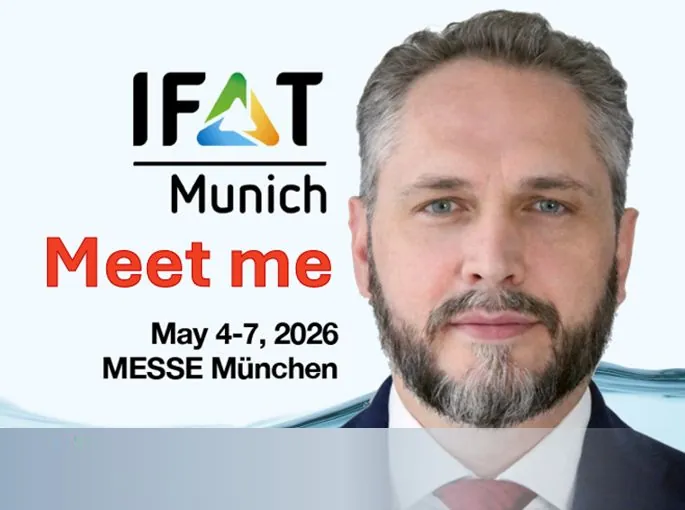
IFAT Munich 2026, held from 4 to 7 May, was particularly relevant from a Central Asian perspective.
The region is facing a combination of challenges that are becoming increasingly difficult to separate: ageing municipal infrastructure, water losses, wastewater treatment requirements, growing waste volumes, recycling, industrial residues and the need to use resources more efficiently. These are precisely the areas covered by IFAT under its core themes of water, recycling and circularity. Around 3,400 exhibitors from more than 60 countries and regions presented technologies ranging from pumps, water and wastewater treatment to waste sorting, recycling, resource recovery and environmental engineering.
Central Asia was not absent from this discussion. A Kazakh delegation officially participated in IFAT Munich 2026, including the Chairman of Kazakhstan’s Centre for Modernisation and Development of Housing and Communal Services. According to Kazakhstan’s government, the delegation used the exhibition to engage with solutions in water supply, wastewater treatment, waste recycling, circular economy and resource efficiency. This is an important signal. For countries such as Kazakhstan and Uzbekistan, environmental technology is increasingly becoming part of the broader industrial and infrastructure modernisation agenda.
The opportunity is therefore not simply to export individual pumps, recycling machines or treatment systems. It is to connect specific Central Asian infrastructure needs with suitable European technology, engineering and implementation partners. For AETEK, IFAT represents exactly this supply side. Central Asia provides the demand: modernisation of water systems, wastewater treatment, waste processing, recycling and resource recovery. Europe provides a deep technology base.
The business-development task lies in bringing the two together around concrete projects rather than around products alone.
MiningMetals Uzbekistan 2025: A Market Moving Toward Industrial Depth
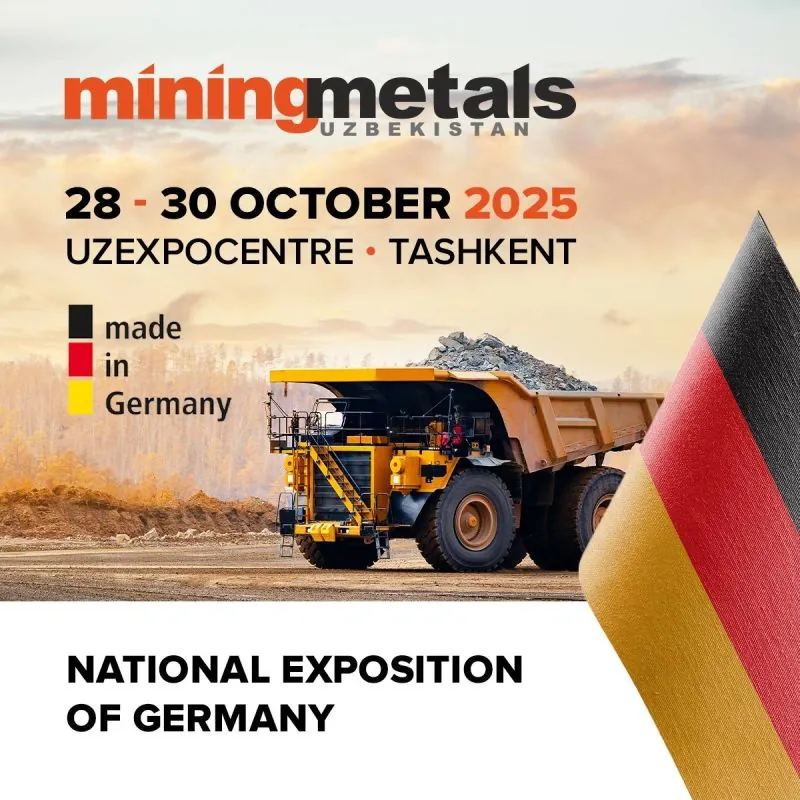
MiningMetals Uzbekistan 2025, held in Tashkent from 28 to 30 October, was more than another regional mining exhibition. As the 19th edition of one of Central Asia’s established mining and metallurgical trade fairs, the event brought together equipment suppliers, engineering companies, technology providers and industrial stakeholders around a market that is becoming increasingly important for international cooperation. The exhibition was accompanied by the 7th Uzbekistan International Mining & Metals Forum, supported by the Ministry of Mining Industry and Geology.
What is particularly relevant is the direction of the discussion. Uzbekistan is no longer focused only on extracting mineral resources. The country is increasingly developing processing, metallurgy, local production, modernisation and higher-value industrial chains around those resources. That development creates a broader demand for international technology: from mining equipment and conveying systems to process engineering, automation, water treatment, energy systems and specialised industrial services.
For AETEK, this is exactly where the market becomes interesting. The opportunity is not simply to bring another product into Uzbekistan. It is to understand where industrial investment is taking place, identify the real technical need and connect that demand with the right European technology and engineering partners.
MiningMetals Uzbekistan 2025 therefore reflected a wider shift already visible across Central Asia: from resource extraction toward industrial capability — and from individual equipment sales toward long-term technology cooperation.
From Alpine Engineering to Central Asia
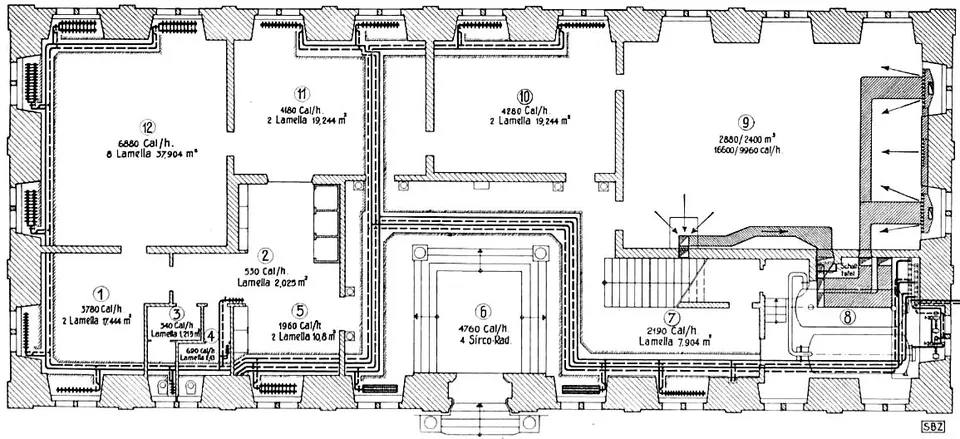
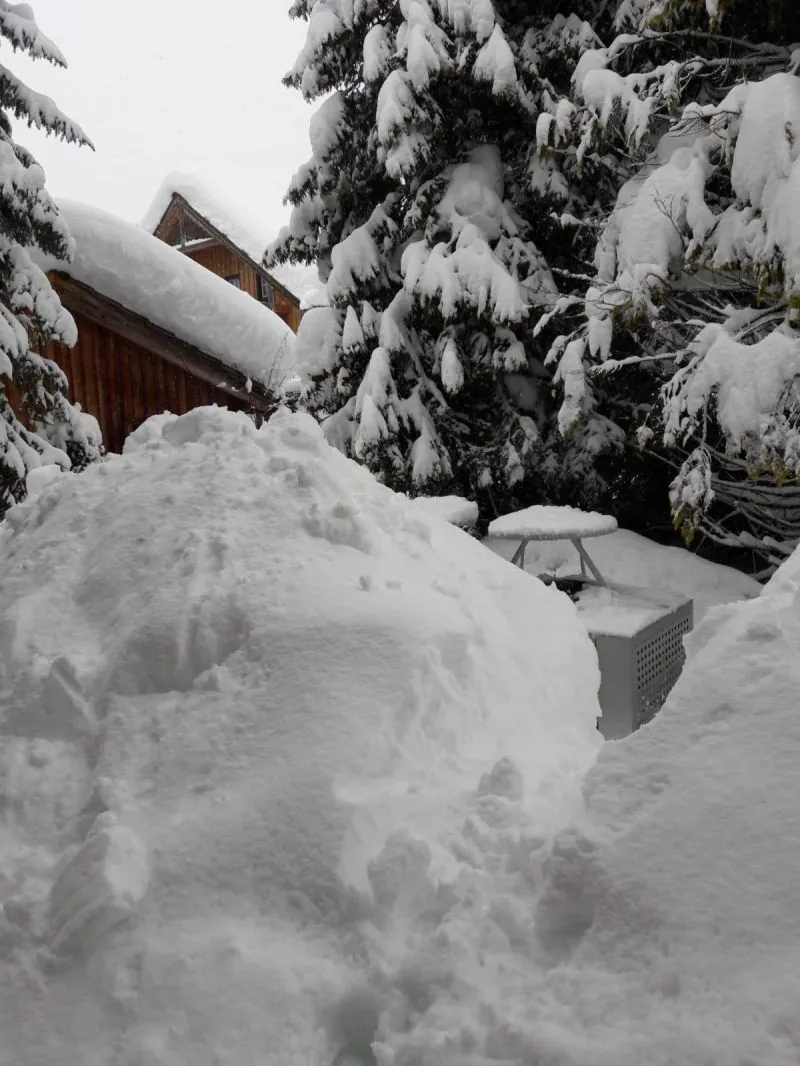
Some technologies appear new only because the market has finally caught up with them. Heat pumps are a good example. Several years ago, I came across a particularly impressive piece of engineering history.
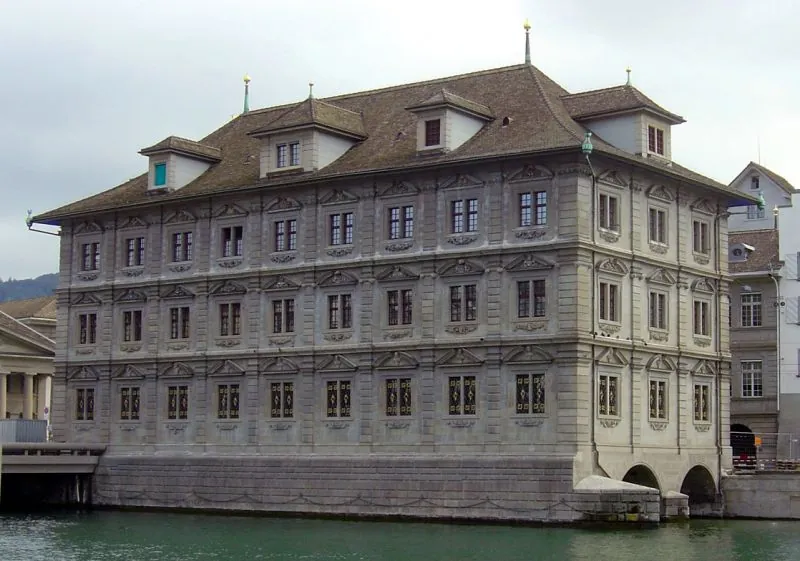
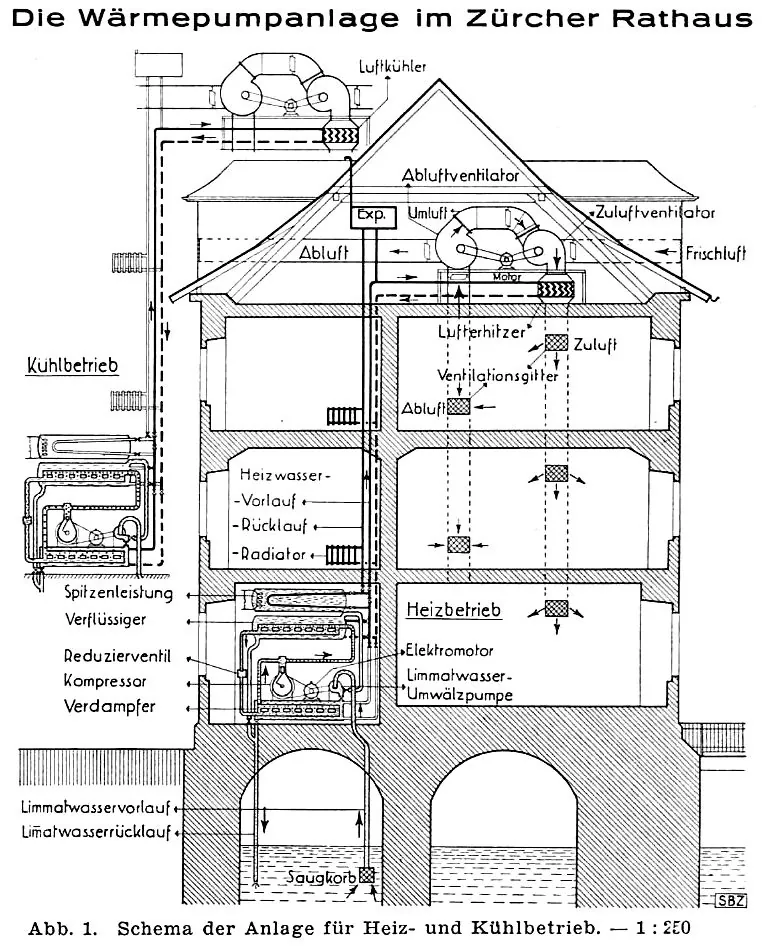
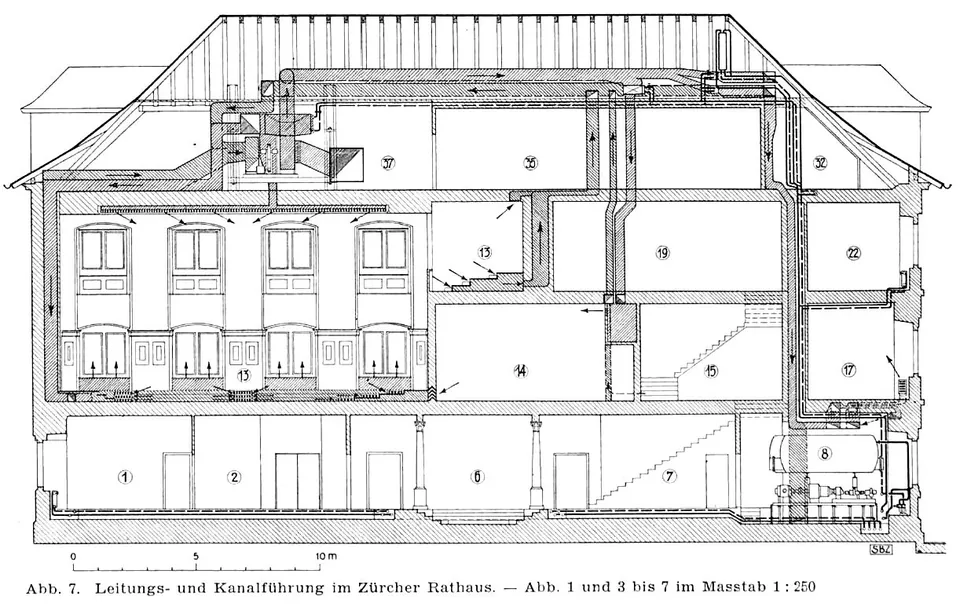
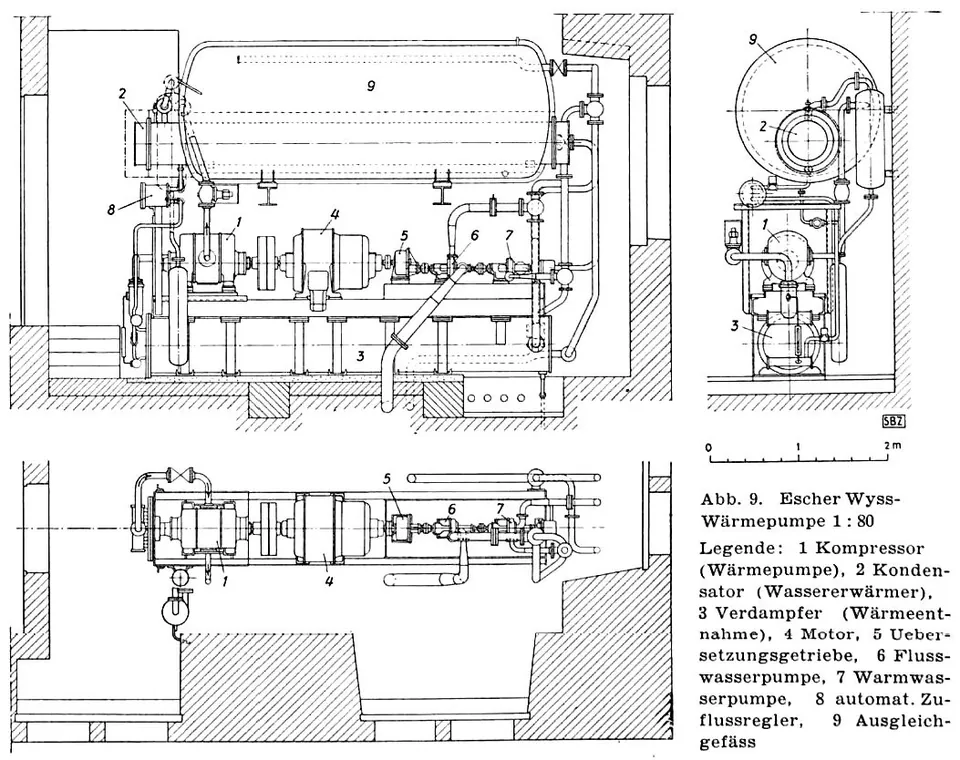
In 1938, a water-to-water heat pump was installed in Zurich Town Hall. It used river water at an average temperature of around 7°C as its heat source and delivered approximately 100 kW of heating capacity with a flow temperature of around 60°C. Remarkably, the system remained in operation until 2012.
When I wrote about it on LinkedIn, I described it as impressive Alpine engineering for its time. What required pioneering engineering in 1938 can today be achieved with compact, highly efficient modern heat-pump technology. The underlying principle, however, has not changed.
A heat pump does not primarily create heat. It moves energy that is already available in the environment — from air, groundwater, rivers, soil, wastewater or industrial processes — to a temperature level at which it can be used for heating, hot water or industrial purposes. That simple principle is becoming increasingly relevant in Central Asia.
A region with a significant heating challenge
Heating is one of the less visible parts of Central Asia's energy transformation. Much of the international discussion focuses understandably on electricity generation, renewable power, grid infrastructure and natural resources. But buildings consume enormous amounts of energy as well. And across large parts of the region, heating infrastructure is still characterised by older boilers, high network losses, inefficient buildings and systems designed during a period when energy efficiency was a much smaller consideration. This is beginning to change.
A particularly interesting signal appeared in Uzbekistan in September 2025.
On 3 September, Uzbekistan's National Energy Efficiency Agency, together with the Ministry of Economy and Finance and ILF Consulting Engineers, organised a specialist seminar in Tashkent on improving the energy efficiency of buildings. More than 150 specialists representing over 50 Uzbek design institutes participated. Among the technologies explicitly discussed were improved building envelopes, solar energy — and heat pumps. Similar training activities continued in Bukhara. This may sound like a relatively small event. In reality, it represents something much larger.
When engineers, design institutes, regulators and public institutions begin discussing a technology systematically, the market is moving from individual demonstration projects toward technical capability building. That is often the stage at which a technology begins to become part of normal infrastructure planning.
From individual systems to energy infrastructure
Heat pumps should also not be understood only as replacements for boilers in individual buildings. Their potential is considerably broader. Modern systems can make use of groundwater, wastewater, industrial excess heat, geothermal energy and other low-temperature heat sources that would otherwise remain unused. Research in Kazakhstan has already examined the application of heat pumps within fifth-generation district heating and cooling systems. A case study for the Northern Industrial Zone of Karaganda combines heat pumps, low-temperature district networks, photovoltaic generation and seasonal thermal storage while also considering the utilisation of waste heat from nearby infrastructure. This changes the perspective. The question is no longer simply: Can a heat pump heat a building in Central Asia? Technically, that question has been answered long ago. The more interesting questions are: Where is the most suitable heat source? Which buildings or industrial processes can use it? What temperatures are required? Can heating and cooling be combined? Can industrial waste heat be recovered instead of discharged? How should the system interact with photovoltaic generation, storage or an existing district-heating network? And finally: Does the complete system make technical and economic sense under local conditions?
Uzbekistan is beginning to create the framework
The institutional environment is moving as well. Uzbekistan introduced a new national energy-efficiency framework during 2025, including the creation of a National Energy Efficiency Agency and mechanisms intended to support energy audits, building renovation and technologies including heat pumps. A large programme now being developed for public buildings identifies heat pumps explicitly as one of the technologies that can replace inefficient fossil-fuel heating systems alongside insulation, modern HVAC and renewable generation. This is particularly relevant because schools, hospitals and other public buildings represent a large and often ageing building stock. It also suggests that the market opportunity will not consist only of selling individual heat pumps. There will be demand for: engineering, system design, hydraulic integration, energy-source assessment, building renovation, controls, installation, commissioning, service and financing. In other words, an ecosystem rather than a product.
The European connection
Europe has spent decades developing heat-pump technology for increasingly demanding applications. High-efficiency systems today operate with air, ground, water and industrial heat sources and can serve everything from residential buildings to commercial properties and large heating networks. But exporting European equipment alone does not automatically create a functioning heat-pump market. Local climatic conditions matter. Electricity prices matter. Existing heating-system temperatures matter. Building quality matters. Service capability matters. And the economics of replacing cheap natural gas or coal can differ significantly from those in Western Europe. That means technologies must be selected and engineered around the market, rather than the market being expected to adapt to the technology.
Where this connects with AETEK
For AETEK, heat pumps represent a good example of the type of industrial and infrastructure development we increasingly see in Central Asia. The technology itself already exists. European engineering expertise exists. The regional demand is emerging. What is often still missing is the structured connection between these elements. That connection can include identifying suitable projects, understanding the local technical requirement, finding the appropriate European technology or engineering partner, establishing access to decision-makers and accompanying the project beyond the initial introduction. This is where AETEK's role becomes relevant. Not as a heat-pump manufacturer. And not simply as an equipment trader. But as a business-development and technology bridge between European industrial capabilities and Central Asian demand.
The heat pump installed in Zurich in 1938 demonstrates how old the underlying engineering principle actually is. What is changing today is the environment around it. Energy efficiency, decarbonisation, industrial waste-heat recovery and the modernisation of heating infrastructure are gradually moving higher on Central Asia's agenda. And sometimes the technologies required for the next stage of development are not technologies that still need to be invented.
They simply need to be brought to the right market, applied to the right problem and integrated into the right system. That is where engineering becomes business development — and where proven European technology can become part of Central Asia's next generation of energy infrastructure.