


AETEK Insights
Ýewropa bilen Merkezi Aziýanyň arasyndaky bazardan synlar
Sergiler, senagat ösüşi, tehnologiýalar — we AETEK-iň taryhy.
Makalalar iňlis dilinde çap edilýär.
Today was meeting with AHK management team in Almaty
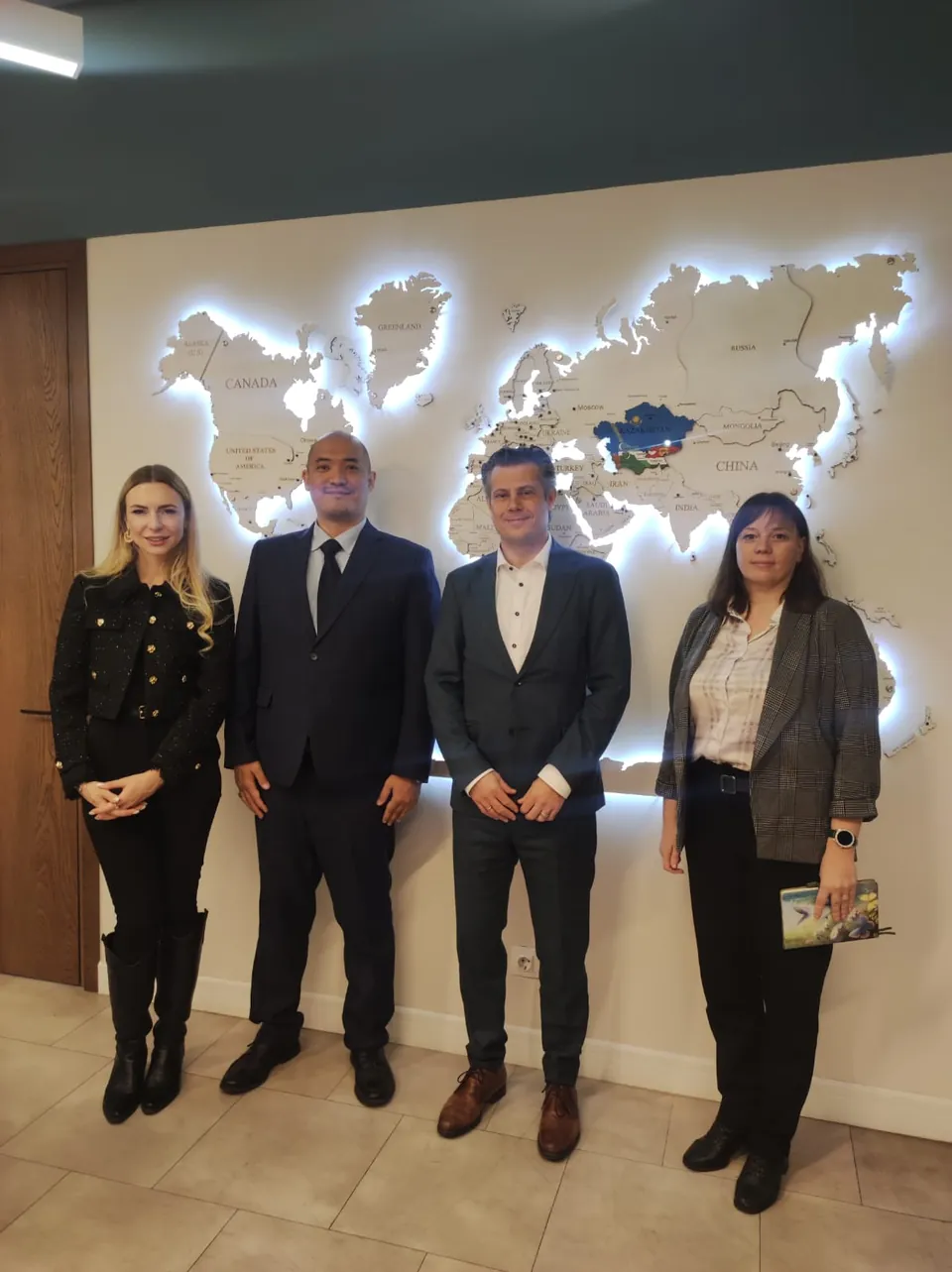
Today was meeting with AHK management team in Almaty, for discussion about potential partnership with AETEK GmbH for business development of German and EU business in Kazakhstan and Central Asian region.
Бүгін Қазақстан мен Орталық Азия аймағында Неміс және Евро Одақтас елдерінің бизнесін дамыту үшін AETEK GmbH компаниясымен әлеуетті серіктестік туралы талқылау үшін AHK басшылығымен Алматыда кездесу болды
ALATAU CITY Thermal Loop
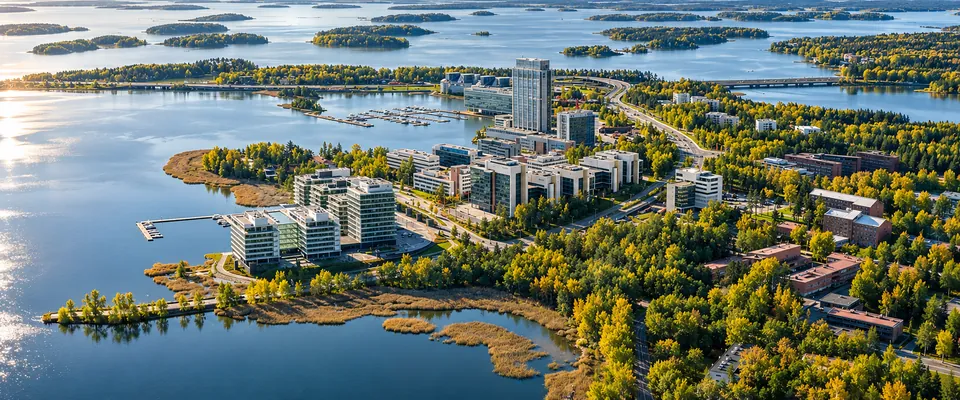
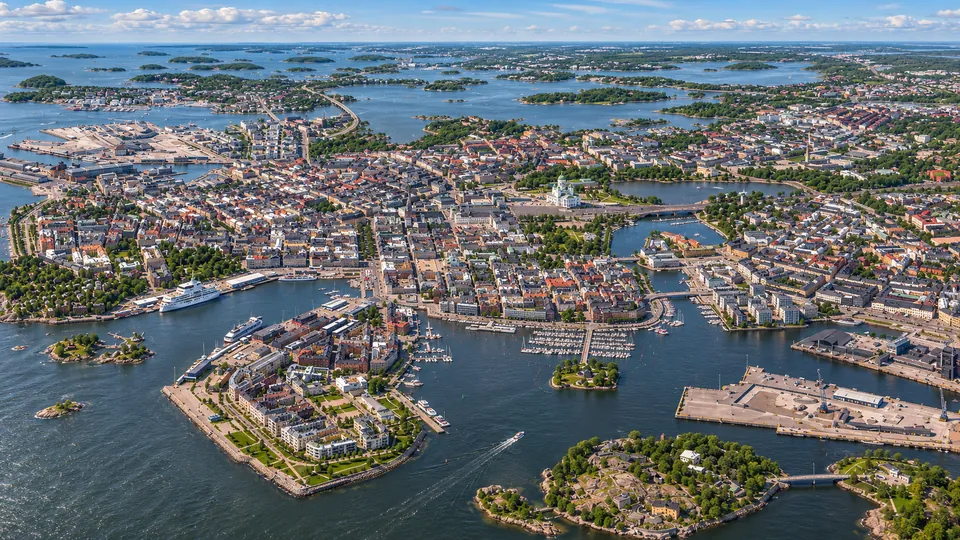
From Waste Heat to Urban Infrastructure
Alatau City has a rare infrastructure advantage: major parts of its future energy, industrial and urban systems are still being designed. This creates an opportunity that mature cities usually encounter too late to consider heat not only as something that must be generated, but also as an energy flow that can be recovered, upgraded, stored and exchanged between different parts of the city. A possible Alatau City Thermal Loop could connect data centres, industrial facilities, commercial buildings, residential districts and other low-temperature heat sources through an integrated thermal infrastructure.
The concept would not replace Alatau's planned heat supply system. It would complement it by recovering energy that would otherwise be rejected into the environment.
Alatau already has the foundation
Kazakhstan's official General Plan demonstrates the scale of the future thermal system. The projected heat load from new residential and public development increases from 1,479 Gcal/h in 2030 to 3,164 Gcal/h in 2040 and 5,114 Gcal/h by 2050. The plan envisages extensive centralised heat supply. By 2050, it provides for:
- ten new cogeneration heat sources with a combined thermal capacity of 3,600 Gcal/h;
- heat pumps with 500 Gcal/h of installed thermal capacity;
- approximately 147.5 km of main heating networks.
The General Plan already contains an important technological principle: in the Green District, heat pumps are proposed using the water of the Kapshagay Reservoir as a source of low-potential heat. At the same time, new industrial facilities are currently expected to use autonomous natural-gas-based heat sources. This creates an interesting engineering question: Could some future industrial and digital assets become heat suppliers as well as energy consumers?
The city is adding new potential heat sources
Alatau's investment portfolio has expanded to 67 projects worth approximately 6.9 billion $. Manufacturing and logistics facilities are already being developed, while CIMC is working on projects involving logistics, data centres and digital infrastructure. The combination is important. Data centres convert a large share of their electricity input into heat that must continuously be removed through cooling systems. Industrial facilities can generate process and cooling heat at different temperature levels. Wastewater, refrigeration systems and large commercial properties may provide additional recoverable thermal streams. In a conventional infrastructure model, these assets are treated independently: electricity in → cooling → heat rejected. A Thermal Loop changes that relationship: electricity / process → recoverable heat → heat pump → thermal network → useful demand. Scandinavia shows how this can work at scale. This is no longer an experimental concept.
Espoo, Finland
Microsoft and Fortum are developing one of the world's largest data-centre heat-recovery systems in the Helsinki metropolitan region. Fortum will capture the excess heat generated by Microsoft's data centres, upgrade it through large-scale heat pumps and feed it into the district-heating network serving Espoo, Kauniainen and Kirkkonummi. At full scale, the recovered heat is expected to cover approximately 40% of the district-heating demand of around 250,000 users.
One particularly relevant lesson for Alatau is that the integration was considered before the facilities were built. Data-centre locations and heat infrastructure were planned together so that the thermal energy could be efficiently transferred into the existing network.
Helsinki, Finland
Helsinki is already moving from individual projects toward a distributed heat-recovery system. Helen reports that 11 data centres were connected to its district-heating system in 2026. A newly agreed OnZero data-centre project could eventually deliver more than 500,000 MWh of recovered heat annually, equivalent to the heating demand of approximately 70,000 apartments.
The technical architecture is straightforward: data-centre cooling → heat recovery → heat pumps → required temperature level → district-heating network. Helen also operates models in which either the utility or the data-centre operator invests in the heat-recovery equipment.
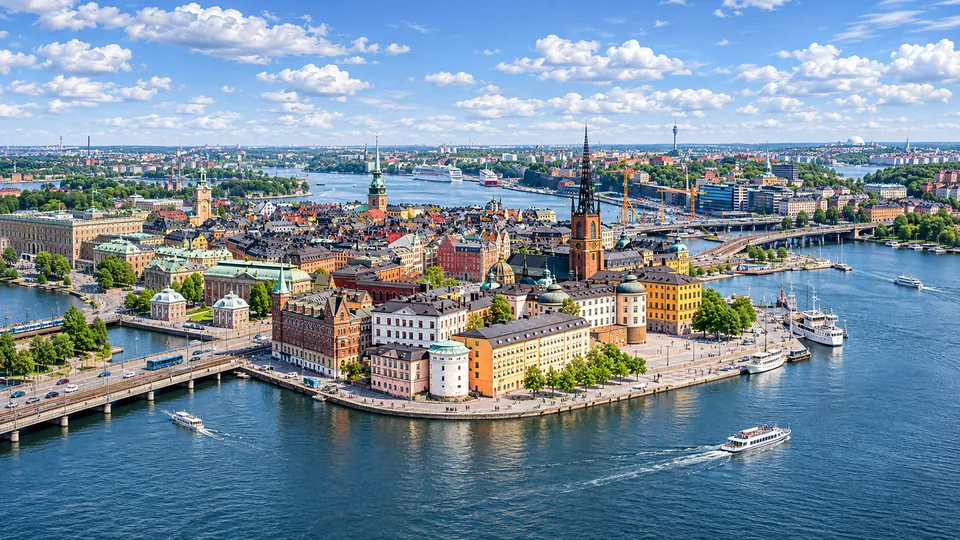
Stockholm, Sweden
Stockholm goes one step further. Through Open District Heating, Stockholm Exergi effectively operates a marketplace for excess heat. Data centres, supermarkets and industrial businesses located close to the network can supply heat to the city and receive payment for it. Stockholm Exergi states that approximately 11,000 apartments are already heated with recovered excess heat. The system therefore creates an economic relationship: waste heat producer → heat supplier → network operator → urban heat consumer.
Stockholm is also developing lower-temperature district-heating architecture because lower system temperatures allow additional sources of low-grade heat to be integrated. This is particularly relevant to a city such as Alatau that can still design its network architecture before full-scale urbanisation.
What could an Alatau Thermal Loop look like?
A practical concept would not begin with a citywide network. It could start with one defined development corridor or district containing several complementary assets. For example:
- Data Centre
- 30–50°C excess heat
- Heat Recovery / Large-Scale Heat Pump
- 60–90°C useful thermal energy
- Thermal Loop
- Residential / Hotel / Hospital / Offices / Industrial Consumers
A second industrial source could feed the same network. Thermal storage could absorb differences between supply and demand. Digital energy management could continuously optimise heat sources, storage, electricity prices and consumer demand. Over time, additional assets could connect to the system. The result would be a multi-source thermal infrastructure platform, rather than a single-purpose heating plant.
The first project should be a Thermal Resource Map
Before selecting technology providers, Alatau would need to understand its future thermal geography. A professional pre-feasibility phase could map:
Heat sources:
- data centres;
- industrial cooling;
- process heat;
- wastewater;
- commercial refrigeration.
Heat demand:
- residential development;
- hotels;
- hospitals;
- universities;
- offices;
- industrial processes.
Technical parameters:
- source temperature;
- available thermal power;
- annual load profile;
- distance between sources and users;
- required network temperatures;
- cooling demand;
- thermal-storage potential.
This would identify the locations where a Thermal Loop could generate both economic and infrastructure value.
Why early planning matters
Alatau's infrastructure programme is already substantial. Kazakhstan plans major new power, water, gas, transport and utility infrastructure, while electricity demand in the wider development area is expected to rise sharply toward 2050. Once industrial plants, data centres and urban districts are constructed with independent energy systems, connecting them later becomes more difficult and expensive. Today, however, Alatau can still reserve: utility corridors, connection points, heat-exchange stations, network interfaces and technical standards. This is precisely the advantage of building a new city.
The most advanced infrastructure decision may therefore not be another individual generation asset. It may be to ensure that future assets can exchange energy with each other.
From technology procurement to system architecture
An Alatau City Thermal Loop would require expertise across several technology fields: industrial heat recovery, large-scale heat pumps, district heating and cooling, thermal storage, pumps, heat exchangers, piping systems, instrumentation, SCADA and digital energy optimisation. Europe, particularly Northern Europe, has substantial practical experience in these technologies and in the commercial models required to connect private heat producers to public or private energy networks. The challenge is therefore not simply to identify a heat-pump supplier. It is to define the project architecture first:
Where is the resource? Where is the demand? Who owns the heat? Who operates the network? Who invests? Who buys the recovered energy? Which technology configuration creates the best business case?
Only then should technology and financing partners be selected.
AETEK perspective
We see particular value in this early phase of infrastructure development, where an emerging system need can be translated into a technically structured project and subsequently matched with suitable European engineering, technology and financing partners. For Alatau City, the opportunity may be especially timely. The city already plans heat pumps, extensive thermal networks, new industrial development and digital infrastructure. The individual components exist. The next question is whether connecting some of them could create an additional infrastructure asset:
A future city does not only need new sources of energy. It can also learn to use the energy it already has.
Heat Recovery × Data Centres × Industry × Heat Pumps × Thermal Storage × District Energy × Digital Optimisation
ALATAU CITY × MIDDLE CORRIDOR
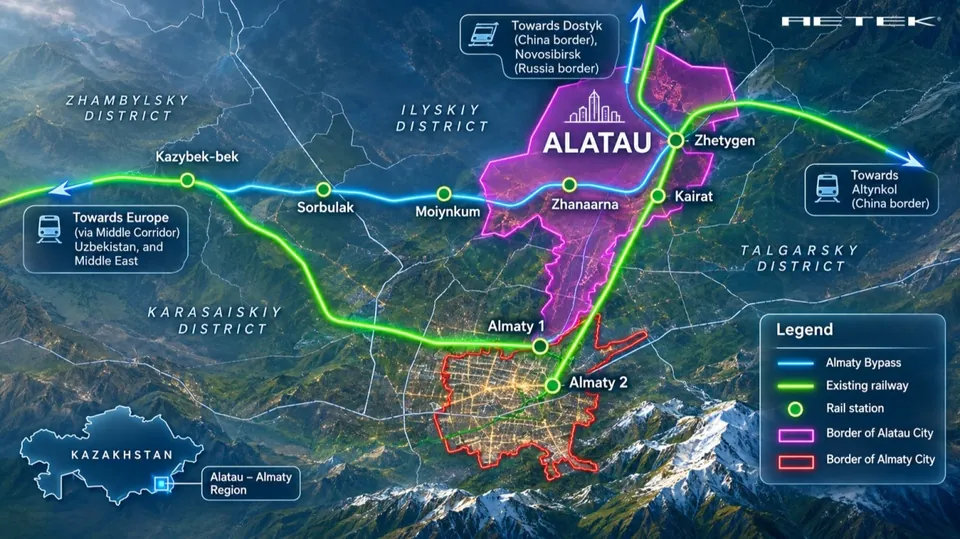
From Transit Geography to Industrial Value Creation - Kazakhstan has a strategic opportunity to become more than a transit country between China and Europe. Alatau City could play an important role in this transformation.
The Trans-Caspian Transport Corridor (TCTC), widely known as the Middle Corridor, is increasingly attracting international attention as an alternative trade route connecting Asia and Europe. For Kazakhstan, however, the real opportunity extends far beyond transportation volumes, railway capacity and transit revenues. It raises a much more fundamental question: How can Kazakhstan transform its geographical position into sustainable industrial competitiveness, technological development and long-term economic value? This is precisely where Alatau City becomes strategically relevant.
1. The Middle Corridor: From Connectivity to Economic Development
The Middle Corridor connects China with Europe through Kazakhstan, the Caspian Sea, Azerbaijan, Georgia and Türkiye, with additional connections across the Black Sea. Its development is supported by international financial institutions and governments seeking more diversified, resilient and efficient Eurasian supply chains. In September 2026, the World Bank published its report Integration: World-Class Trade Logistics Along the Trans-Caspian Transport Corridor. The report estimates that targeted investments and operational improvements could more than triple trade volumes along the corridor by 2040. It also identifies approximately 25 billion $ in necessary physical infrastructure investments and another 30 billion $ in complementary investments across the corridor countries.
Most importantly, the World Bank emphasizes the transformation from a transport corridor into an economic corridor - one capable of generating business activity, employment and industrial growth along its route. For Kazakhstan, this distinction is fundamental. Moving goods across a country creates economic activity. Developing industries that manufacture, process, assemble, maintain and distribute those goods creates a much broader foundation for economic development.
2. Why Alatau City Matters
Located within the Almaty economic region, Alatau City benefits from proximity to established commercial markets, industrial infrastructure and transport connections towards China and the wider Central Asian region. Its development concept extends far beyond residential construction and urban infrastructure. The officially designated Growing District is intended to become an export-oriented industrial and logistics cluster, integrating manufacturing, modern logistics infrastructure and international market connectivity. This creates a potentially important relationship with the Middle Corridor. Alatau City could evolve into a location where international connectivity supports actual industrial operations rather than transit alone.
Several complementary activities become conceivable:
Industrial manufacturing and technology localization.
Assembly, technical service and maintenance facilities.
Regional distribution and industrial procurement.
Logistics and value-added processing.
Cross-border production and supplier partnerships.
Importantly, Alatau City should not yet be considered an established operational hub of the Middle Corridor. Its integration into international freight networks will depend on commercially viable connections, functioning terminals, infrastructure availability and reliable logistics services. Nevertheless, developments are already underway. These developments illustrate how the city's industrial ambitions could gradually acquire an operational foundation.
3. A Strategic Opportunity for Kazakhstan
The potential combination of the Middle Corridor and Alatau City could strengthen Kazakhstan's economic position in three interconnected ways.
First: Industrial diversification.
Kazakhstan could capture a greater share of economic value through domestic processing, manufacturing and industrial services instead of relying predominantly on raw material exports and transit activities.
Second: Integration into international value chains.
European and Asian technology companies could use Kazakhstan as a regional location for technical services, assembly, production and distribution serving Central Asian and potentially wider Eurasian markets.
Third: Greater economic resilience.
Diversified transport connections, industrial capabilities and international partnerships could reduce dependence on individual markets, routes and economic sectors.
The strategic importance of Kazakhstan's railway network is already reflected in the World Bank's February 2026 approval of an 846 million $ guarantee designed to mobilize 1.41 billion $ in long-term commercial financing for Middle Corridor rail connectivity improvements. This financing concerns Kazakhstan's wider railway infrastructure, not Alatau City specifically. Nevertheless, it forms part of the broader transport environment on which the city's future connectivity may depend.
4. From International Agreements to Industrial Execution
The November 2026 Alatau City investment roadshow in London, Berlin and Frankfurt provides another important signal. According to the Government of Kazakhstan, the German stage resulted in 18 agreements with an indicated investment potential of 715 million $. Across the European roadshow, 27 commercial documents represented a cumulative investment potential exceeding 2 billion $. These figures reflect announced investment potential rather than completed investments. The discussions in Germany included infrastructure financing, industrial cooperation, engineering systems, equipment procurement and technological partnerships. For European industry, such developments may create opportunities extending well beyond construction contracts. They could generate demand for industrial equipment, water and energy systems, environmental technologies, mechanical engineering, automation and technical services.
However, investment announcements do not automatically become executable projects. Successful implementation requires identifiable project owners, secured financing, transparent procurement structures, technically qualified suppliers and commercially sustainable partnerships. This is where structured business development becomes essential.
5. The AETEK Perspective: Connecting Infrastructure with Industrial Demand
At AETEK, we view the potential relationship between Alatau City and the Middle Corridor primarily through the lens of industrial market development. For European technology providers, new infrastructure and industrial zones do not automatically translate into accessible business opportunities. The critical work lies in identifying actual demand, understanding project ownership, establishing access to decision-makers and developing commercially viable partnerships.
An industrial investor may initially require technical representation, maintenance capabilities, warehousing or a small assembly facility long before establishing a full production plant. Similarly, an infrastructure development may generate demand for European equipment only when project specifications, procurement responsibilities and financing arrangements become sufficiently clear. The challenge is therefore to connect infrastructure development, industrial investment and technology demand before commercial opportunities become fully visible to the market. This is the approach behind AETEK's Business Development as a Service (BDaaS) model.
6. The Real Measure of Success
Alatau City's future importance will not be determined solely by the number of agreements signed, buildings constructed or containers handled. Its industrial relevance will depend on more fundamental outcomes: Can international companies establish viable operations? Can local industries become integrated into competitive supply chains? Can European technologies contribute to productive investment? And can Kazakhstan retain a larger share of the economic value flowing through its territory? The answers will determine whether Alatau City becomes primarily an ambitious urban development or also a meaningful component of a wider Eurasian economic corridor.
Conclusion: Beyond Transit
Kazakhstan's geographical position is an established advantage. Turning that advantage into sustained industrial competitiveness requires infrastructure, investment, technology, institutions and commercial execution to work together. The Middle Corridor can connect Kazakhstan to international markets. Alatau City could help Kazakhstan create more value within those markets. For European industry, the opportunity is not simply to participate in a new city's construction. It is to contribute to the development of a new industrial ecosystem at an important intersection of Eurasian trade. The Middle Corridor moves goods. Alatau City could build industries around them.
Sources & References
World Bank (28 September 2026) Integration: World-Class Trade Logistics Along the Trans-Caspian Transport Corridor worldbank.org/en/region/eca/publication/world-class-trade-logistics-along-trans-caspian-transport-corridor
Alatau City Authority Official Alatau City Development Concept – Growing District alataucity.kz/en
World Bank (19 February 2026) World Bank Support to Enhance Rail Connectivity and Logistics in Kazakhstan worldbank.org/en/news/press-release/2026/02/19/world-bank-support-to-enhance-rail-connectivity-and-logistics-in-kazakhstan
Government of Kazakhstan (6 November 2026) Alatau City Concludes European Roadshow with Investment Potential Exceeding $2 Billion primeminister.kz/en/news/alatau-city-concludes-european-roadshow-with-investment-potential-exceeding-2-billion-32092
Beyond Compliance: How EPR is Unlocking New Markets for European Tech in Central Asia
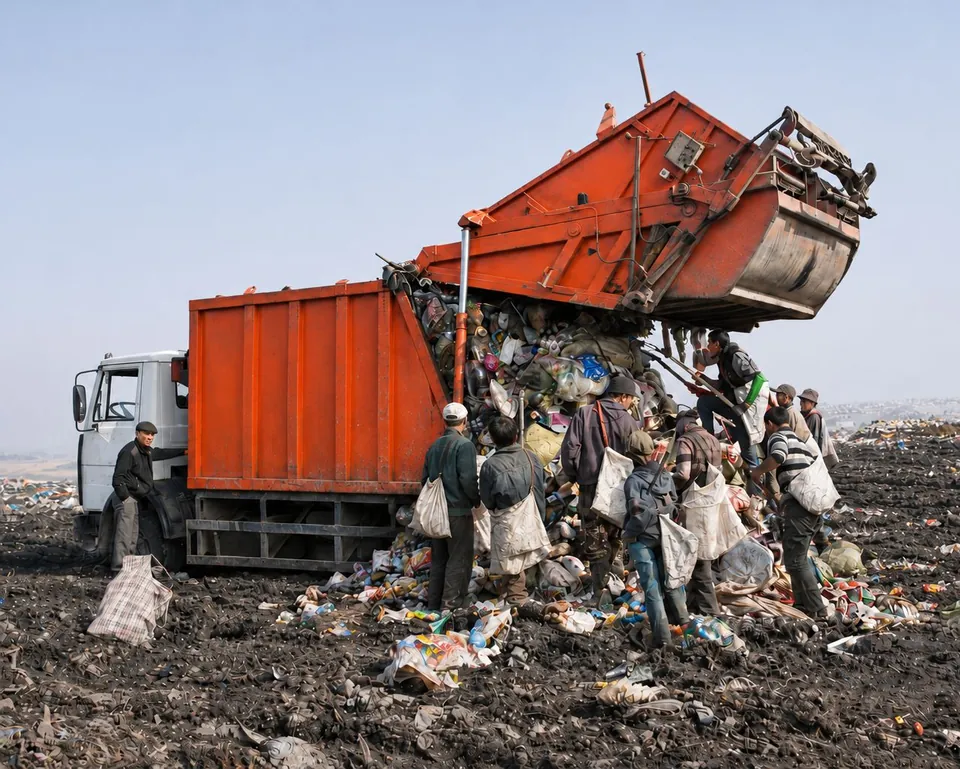
Extended Producer Responsibility is becoming much more than an environmental compliance topic in Central Asia. Kazakhstan, Uzbekistan and increasingly other countries in the region, EPR is beginning to reshape the economics of waste management, recycling and circular infrastructure. Regulation is creating obligations. Obligations create financing mechanisms. And those mechanisms ultimately create demand for technology, equipment and new infrastructure.
For European technology providers, this means that the opportunity is not limited to individual recycling projects. A broader market is emerging around sorting, material recovery, plastics and tyre recycling, construction waste, industrial waste treatment, landfill modernisation and related technologies.
Central Asia is moving toward a more structured circular economy – and the most interesting opportunities may emerge before the tender is published.
Five Trade Fairs, One Clearer Picture of Central Asia’s Industrial Direction
Artur R. PAMIN
International Market Expansion | Business Unit Building | Central Asia | Industrial B2B | BDaaS | ∴
30. Oktober 2026
Over the past weeks, AETEK has been present across five important industrial trade fairs: MiningMetals Central Asia, KIOGE and PowerExpo in Almaty, MiningMetals Uzbekistan in Tashkent, and Chillventa in Nuremberg.
Different countries, different industries, different perspectives — but together they have given us a much clearer picture of where industrial development in Central Asia is heading and where European technology can realistically become part of it.
Across these events, we were able to conduct dozens of substantial conversations with manufacturers, engineering companies, industrial customers, local partners and decisionmakers.
More importantly, these discussions provided something that market reports alone cannot deliver first-hand insight into priorities, current projects, changing expectations, technology needs and the practical realities behind investment announcements.
And several tendencies are becoming increasingly clear. Central Asia is moving further away from the image of a region defined mainly by raw materials and equipment imports. Mining, metallurgy, oil and gas, power generation and infrastructure remain core sectors, but the discussion around them is changing. There is increasing focus on processing, localization, technology transfer, energy efficiency, service capability and long-term industrial cooperation.
Customers increasingly ask not only whether a supplier can deliver equipment, but whether the technology can be supported locally, whether spare parts and service can be secured, whether engineering questions can be solved quickly and whether the supplier is prepared to remain engaged beyond the first project.
At the same time, international competition is clearly intensifying. European companies are present, but so are suppliers and investors from China, South Korea, Türkiye, the Middle East and other regions. Many of them are no longer approaching Central Asia simply as an export destination. They are building relationships, local structures, service capabilities, production partnerships and long-term positions. For European industrial companies, this makes the market both more attractive and more demanding.
A strong product is still essential. But technology alone is becoming less sufficient. This is where our visit to Chillventa in Nuremberg added another important perspective. While the exhibitions in Almaty and Tashkent allowed us to look closely at the developing demand side of Central Asian industry, Chillventa provided a direct view into the European technology side — industrial refrigeration, cooling systems, energy efficiency, heat pumps, automation, controls and increasingly sophisticated technical solutions for industrial applications.
This combination is particularly valuable. On one side, we see where Central Asian industries are investing, which projects are emerging and what technical problems need to be solved. On the other side, we meet European manufacturers developing technologies that may be able to address exactly these requirements. The real business-development task lies in connecting the two:
Demand does not automatically find the right technology. Technology does not automatically find the right market.
Someone must understand both sides well enough to identify where a genuine commercial fit exists. This is how we see the role of AETEK.
A trade fair can open a door. A conversation can reveal an opportunity. A technology can solve a problem. But sustainable business begins only when someone continues the work afterwards, qualifying the demand, identifying the real decision structure, understanding the technical fit, coordinating commercial questions and building the relationships required to move an opportunity forward.
For us, the coming months will therefore not simply be about generating more contacts.
The focus is increasingly on converting the intelligence gathered across Kazakhstan, Uzbekistan and the European technology landscape into structured business-development activity. We will continue to deepen our understanding of industrial demand, identify where European technologies have a realistic fit, strengthen our regional network and develop selected opportunities together with manufacturers and local industrial partners.
The past weeks have also confirmed something else that is important for our longer-term perspective: Central Asia cannot be understood through one industry, one country or one event.
The more closely we look, the more these markets, technologies and industrial sectors become interconnected. And this is why our work combines market intelligence with business development. Not simply observing where investment is announced but understanding what follows from it. Not simply identifying companies but understanding where real demand is developing. Not simply presenting technology but identifying where it can create value. And, not simply creating contacts, but developing commercial pathways.
The past weeks have given us valuable new information, stronger relationships and a much clearer view of where the next opportunities may emerge. Now the important part begins. Turning these insights into business.
That will be one of AETEK’s central tasks over the coming months.
Europe ↔ Central Asia
From Market Potential To Business.
Unlocking Central Asia: What the Trans-Caspian Transport Corridor Really Changes for European Industrial Providers
Artur R. PAMIN
International Market Expansion | Business Unit Building | Central Asia | Industrial B2B | BDaaS | ∴
25 October 2026
Any European machinery manufacturer or technology provider considering entry into Central Asia needs answers to concrete questions: Can we deliver to customers reliably? Can we service our equipment on-site? And is there sufficient robust demand to justify building the market?
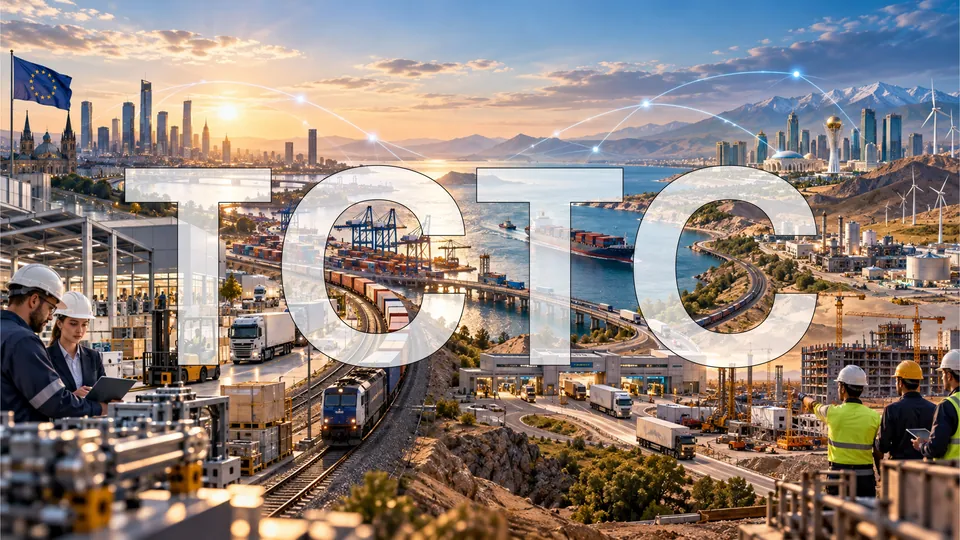
The Trans-Caspian Transport Corridor, or TCTC for short (also known as the "Middle Corridor"), is highly relevant to this decision. It connects Europe via Turkey or the Black Sea, the South Caucasus, and the Caspian Sea to Central Asia.
The World Bank report "Integration: World-Class Trade Logistics Along the Trans-Caspian Transport Corridor" highlights both its economic significance and the operational limitations that still exist.
For European manufacturers still weighing their market entry, three practical consequences can be derived from this.
A first machinery order requires a robust supply chain.
Consider a European plant manufacturer offering a production line to a customer in Uzbekistan. In addition to freight costs, calculations must account for transshipment, warehousing, capital tie-up, and coordination with the installation team. If the equipment arrives later than expected, this can result in additional travel, waiting times, and delayed commissioning. Therefore, a low-cost transport offer alone does not indicate whether the order can be executed economically. This is precisely where the World Bank report intervenes: the corridor requires not only infrastructure but also better coordination between operators, reliable transport services, and end-to-end shipment visibility. For the first order, this means: verifying the specific route to the customer, calculating realistic delivery timeframes, and selecting a logistics partner with clear responsibility for the entire transport chain. Organizing the last mile to the factory must already be part of the quotation phase. The TCTC expands possible delivery routes. Whether it offers the right solution for a specific piece of equipment must be demonstrated by that specific shipment.
A convincing service concept facilitates the purchasing decision.
A second practical example: A manufacturer supplies pumps or drive technology to an industrial plant in Kazakhstan. The customer also evaluates how quickly the equipment can be restored after a defect. While regular transport links may suffice for planned replenishments, urgent spare parts required during a production stoppage demand different logistics. The report explicitly states that high-quality machinery and time-critical industrial components require different logistics services than bulk goods. Reliability, speed, and incident management carry particular weight here. For the manufacturer, this dictates a concrete approach: defining critical spare parts jointly with the customer, organizing appropriate local inventory, and qualifying a service partner. For particularly urgent parts, an additional transport option must be evaluated. This transforms the general question of accessibility in Central Asia into a verifiable performance promise to the customer.
The expansion of the corridor also creates demand for industrial technology.
For European providers, the TCTC is simultaneously a potential sales market. The World Bank report cites, among other things, the expansion of logistics hubs in the Tashkent region and the modernization of rolling stock and signaling technology for Uzbekistan. For Kazakhstan, it describes significant renewal needs for locomotives and freight wagons. For a specialized manufacturer, these factors can create opportunities for components, workshop equipment, testing procedures, or maintenance technology. Which of these actually fit one's own portfolio must be assessed against the respective operator and project. The report provides an existing industrial example with Alstom in Kazakhstan: it describes locomotive production in Astana, switch drive manufacturing in Almaty, and several maintenance locations. European technology is already linked with local manufacturing and service here. This is relevant for mid-sized suppliers. Access to a market can also occur through existing manufacturers, operators, and their local supply chains.
For planned projects, the distinction remains crucial: documented investment needs are not yet tenders. Several projects mentioned in the report are still in the feasibility study or preparation phase. Before incurring sales costs, clarity is needed regarding project status, financing, procurement, and the responsible decision-maker. For companies still deciding, a step-by-step entry is advisable: a clearly defined customer segment, a qualified local partner, and a first order with thoroughly calculated delivery and service organization. Subsequently, actual experience can determine whether additional inventory, own service resources, or a local presence make economic sense.
At AETEK, we view the TCTC from exactly this perspective: How does it improve concrete market entry for our European principals? Where does their technology align with demonstrable demand? And which partners and processes are needed to turn a first order into a lasting customer relationship?
The decision for Central Asia becomes robust when demand, delivery, and service align for the first customer. The TCTC is an important component of this assessment. Which prerequisite is currently decisive for your company: a concrete customer, a reliable supply chain, or viable on-site service?
Source: Muneeza M. Alam and Luis C. Blancas, World Bank (2026), "Integration: World-Class Trade Logistics Along the Trans-Caspian Transport Corridor", particularly chapters 4 and 5 as well as Appendix D. The examples regarding the first equipment order and spare parts supply are derived application scenarios.
From Memorandum to Industrial Projects: Kazakhstan and Bavaria
This is another important step in strengthening the economic bridge between Kazakhstan and Germany. The direct involvement of Bayern International can be particularly valuable for bringing more Bavarian SMEs into concrete cooperation with Kazakhstan. Energy, raw materials, environmental technologies, agriculture and industrial technologies offer a broad and highly relevant field for joint projects.
The real opportunity now lies in translating institutional agreements into company-level cooperation. For many German industrial companies, Kazakhstan is becoming increasingly interesting not only as an export market, but as a location for long-term partnerships and local value creation. At the same time, successful market development will require local understanding, reliable partners and sustained engagement.
Structures such as this memorandum can help reduce barriers and accelerate access for companies on both sides. The next step should be clear: turning this new channel into tangible industrial projects.
Source: the cooperation memorandum between KAZAKH INVEST and Bayern International, as reported by Trend (trend.az/casia/kazakhstan/4230224.html)
Critical Minerals: Central Asia is moving beyond the resource story
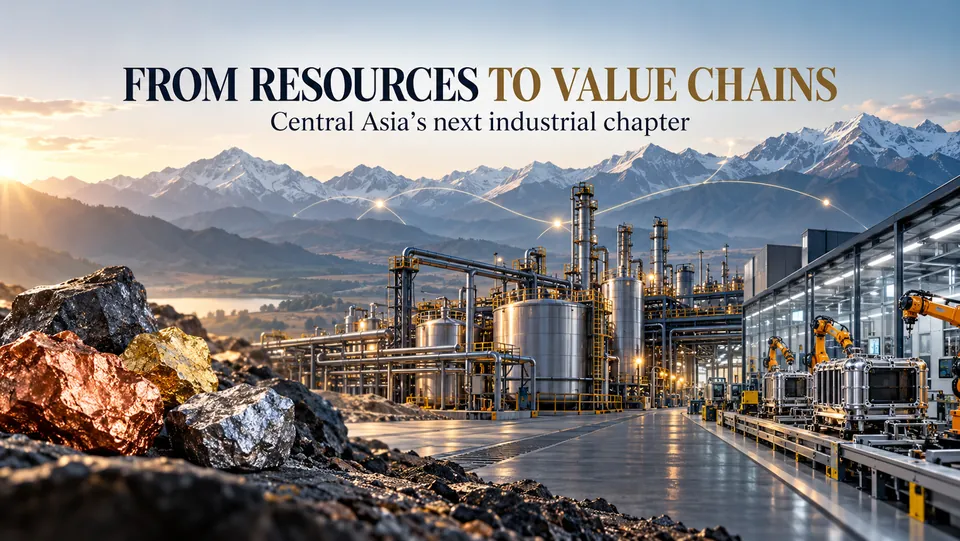
For many years, Central Asia has been discussed primarily in terms of its natural resources. Oil, gas, uranium, metals and minerals have always been part of the region’s economic relevance. What is becoming increasingly interesting, however, is that the discussion is beginning to move beyond the question of what can be extracted and exported. The more important question is becoming: what part of the industrial value chain can remain in the region?
A number of developments over the past few weeks illustrate this shift particularly well.
On 17 September, Uzbekistan Technological Metals Complex — TMK — held a roadshow in Berlin focused on critical minerals and industrial cooperation. According to TMK, representatives of around 20 German industrial companies, end users and financial institutions participated. What caught my attention was not simply the size of the project portfolio presented — more than 140 investment projects with a total value of approximately 4.2 billion $ — but the way the objective was formulated. The stated intention is not merely to increase exports of raw materials or semi-finished products. TMK is looking to attract technologies and manufacturing expertise, localise them in Uzbekistan and develop higher-value production around the country's mineral resources. That is a fundamentally different industrial proposition.
A similar direction was visible only one day earlier on a much broader regional level. At the first Korea–Central Asia summit, South Korea and the five Central Asian countries placed critical minerals, energy and supply chains at the centre of their discussions. More than 70 agreements and memoranda were concluded across areas including mining, energy, infrastructure, technology and investment. Particularly noteworthy was South Korea's emphasis on cooperation extending beyond the supply of raw materials towards the entire critical-minerals value chain — from exploration through processing to final manufacturing.
The bilateral talks with Kazakhstan showed the same pattern. Cooperation was discussed not only around mineral supplies, but also around nuclear energy, science, technology and the development of mineral resources using Korean industrial capabilities. These developments should not be seen in isolation. Europe has been moving in a similar direction for some time. The EU's strategic partnership with Kazakhstan explicitly covers raw materials, refined materials, batteries and renewable hydrogen value chains. With Uzbekistan, the EU signed a memorandum on critical raw materials in 2024, with the stated objective of developing sustainable local value chains alongside secure access to strategically important materials. International Partnerships
Taken together, a larger picture begins to emerge. Central Asia is increasingly becoming relevant not simply because it possesses resources, but because governments and industrial institutions in the region are trying to build industrial capability around those resources. And this changes the opportunity for European industrial companies. If a country primarily exports raw materials, the commercial opportunity is concentrated around extraction, mining equipment and logistics. Once processing, refining and manufacturing are increasingly localised, a much broader industrial ecosystem begins to develop around them. That ecosystem requires process technologies, pumps and valves, filtration, automation, measurement technology, engineering, water treatment, energy infrastructure, specialised materials, maintenance, industrial services and many other capabilities that European industry has developed over decades. But there is another important point. Having the technology does not automatically mean participating in these emerging value chains. The projects are becoming larger, the stakeholder structures more complex and the expectation of local industrial participation stronger. A company therefore has to understand not only where demand exists, but how the emerging industrial structure actually works, which projects are real, who the relevant actors are, which form of cooperation is appropriate and where its own technology genuinely fits. This is where I believe the discussion about market entry has to evolve.
For many companies, international expansion is still thought of primarily as an export question: find a distributor, identify customers, participate in a trade fair and sell equipment. That will continue to work in many situations. But the developments we are currently seeing in Central Asia increasingly point towards something broader. For European companies, the opportunity may therefore no longer be simply to sell into Central Asia, but to become part of the industrial development taking place there. And for Central Asian companies, the opposite question becomes equally important: how can local resources, manufacturing capability and new industrial products be connected with European technology, customers, partners and markets?
This is precisely why I increasingly see the economic relationship between Europe and Central Asia as a two-way industrial development process, rather than a traditional one-directional export corridor. The raw materials may provide the starting point. The much larger opportunity could lie in what is built around them.
At AETEK, this is the perspective from which we look at industrial business development between Europe and Central Asia: not only identifying where demand exists, but understanding where new value chains are forming and how companies can become part of them.
From resources to value chains. From market potential to business.
Three Days in Almaty
Trade fairs are useful for seeing technologies. They become more interesting when they help us understand where a market is actually moving.
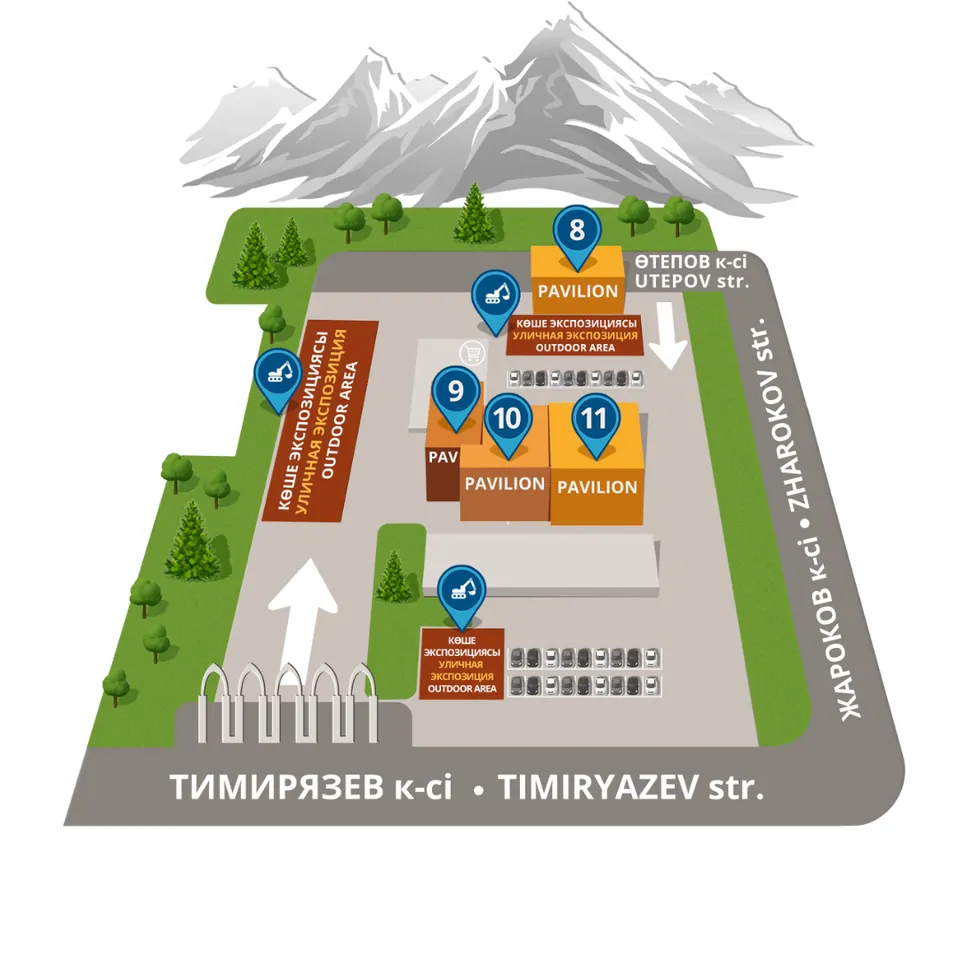
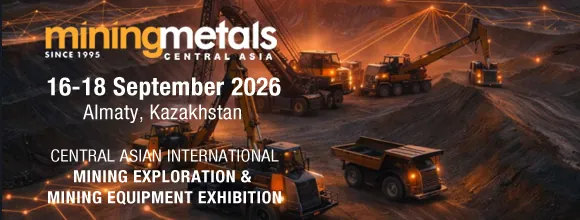
From 16 to 18 September 2026, Mining & Metals Central Asia (miningworld.kz/en) brought the mining and metallurgical industry together in Almaty. This year’s event attracted 533 companies from 30 countries and more than 7,000 industry professionals. Germany alone was represented by 43 companies in the German Pavilion.
For AETEK, however, the most relevant part of the exhibition was not its size. It was the opportunity to compare what we had been observing from Germany with what was happening directly on the ground. In the weeks before the exhibition, we had systematically analysed participating companies, technologies and potential points of connection with industrial developments in Kazakhstan and the wider Central Asian region. During all three exhibition days, Mr. A. Kair supported AETEK locally in Almaty, meeting companies, discussing their regional activities and testing where genuine interest in further market development existed. The conversations produced new contacts, follow-up opportunities and, perhaps more importantly, a clearer picture of what European industrial companies are looking for in the region. Several discussions quickly moved beyond products. Companies wanted to understand where concrete projects exist, how potential customers can be identified, who the relevant decision-makers are and whether initial contacts can be developed into a real commercial pipeline. This distinction matters.
A trade fair can create visibility and introductions. But entering a market requires continuity after the exhibition: qualifying demand, understanding projects, identifying stakeholders and staying involved long enough to turn an initial conversation into a business opportunity. The three days in Almaty also reinforced another observation. Central Asia’s industrial story is becoming broader. Mining remains fundamental, but the discussion increasingly extends into processing, infrastructure, equipment modernisation, local production, technology cooperation and the development of more complete industrial value chains. The official programme itself reflected this transition, covering topics from critical minerals to processing technologies and digital mining.
For AETEK, the exhibition therefore served two purposes. It created new relationships between European technology providers and our developing Central Asian network. But it also provided another piece of evidence for a larger development that we have been observing across Kazakhstan, Uzbekistan and the wider region: Central Asia is beginning to ask not only what can be extracted from its resource base, but what industrial value can be created around it. That question leads directly to one of the most important topics currently shaping the region. Critical minerals — and the gradual shift from a resource story toward an industrial value-chain story.
The Story Behind AETEK
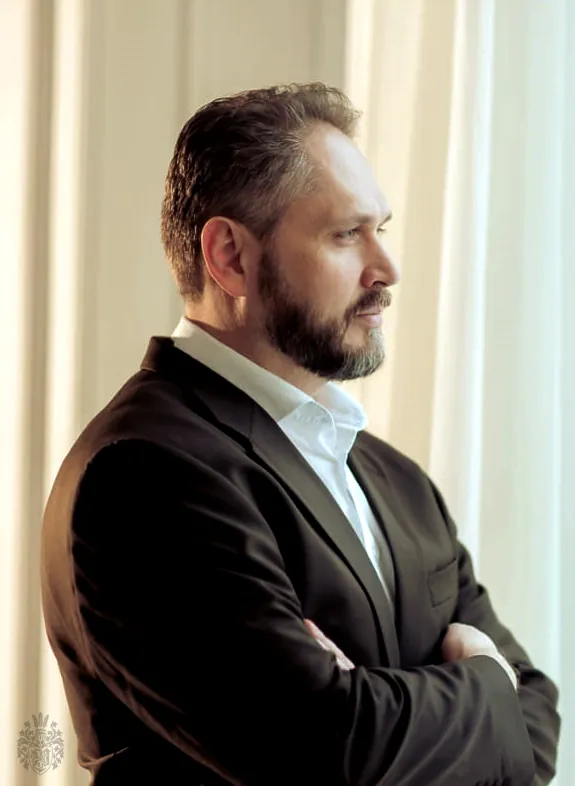
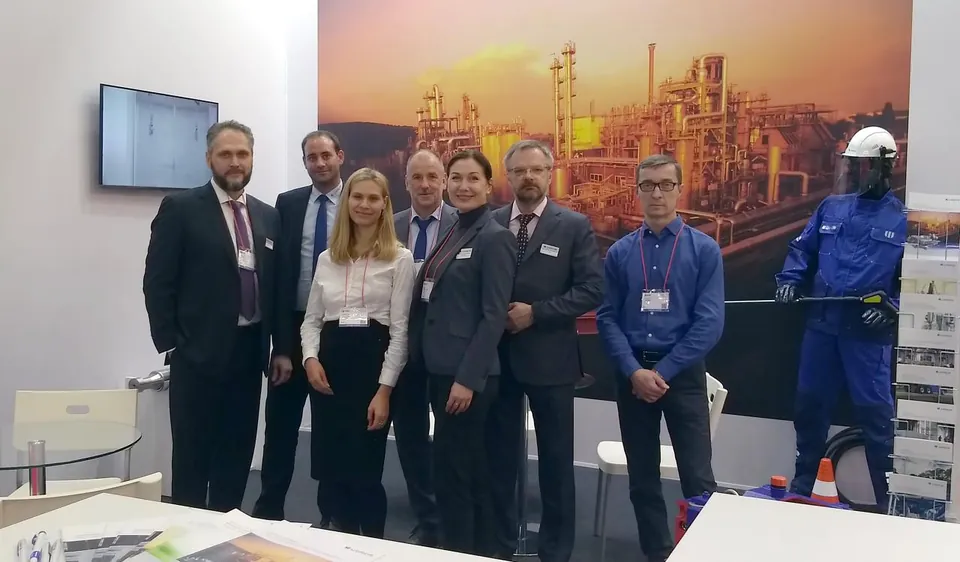
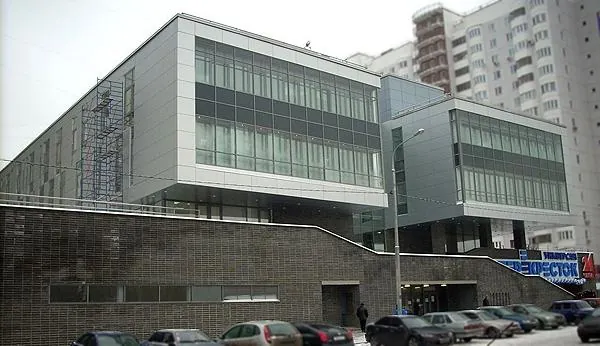
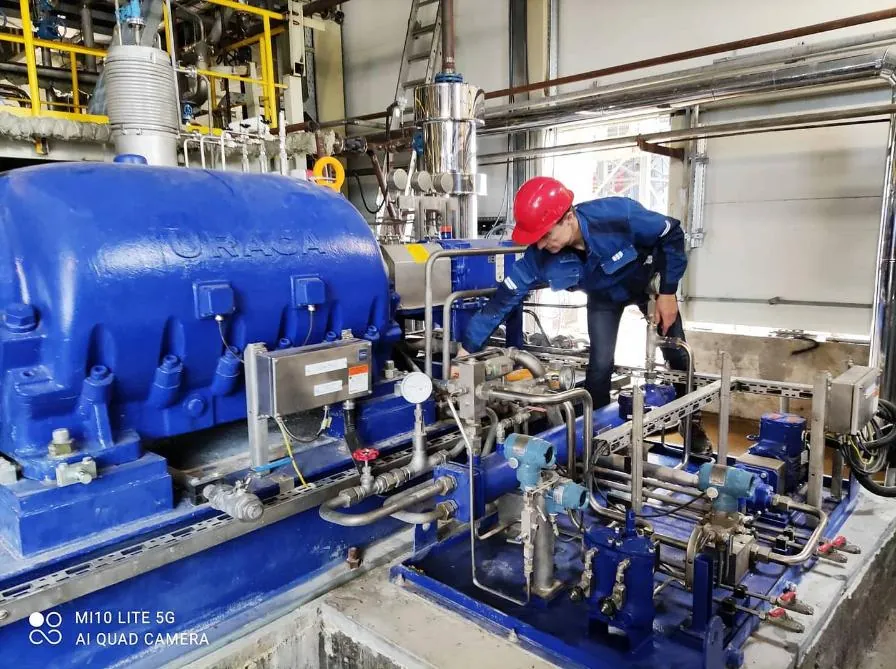
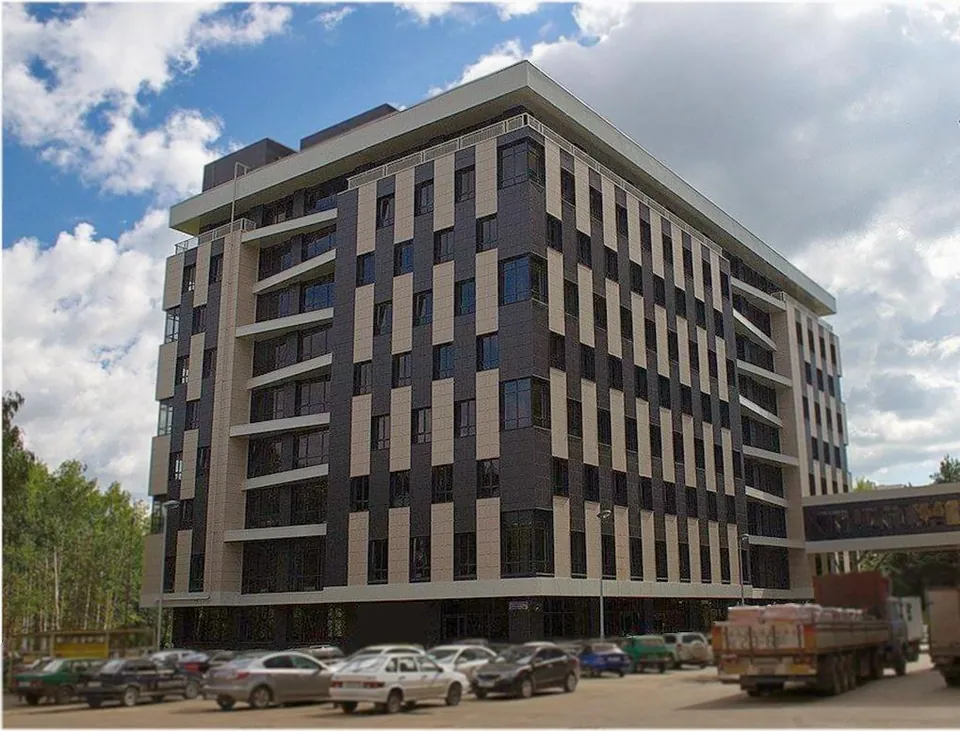
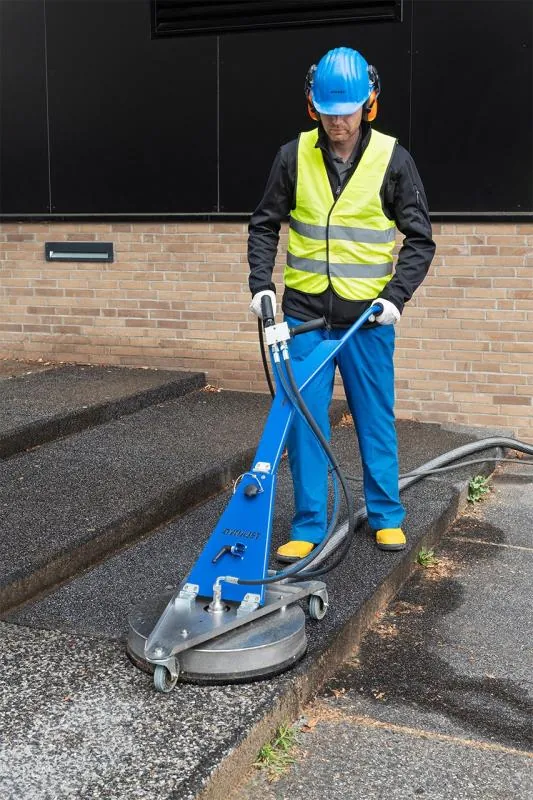
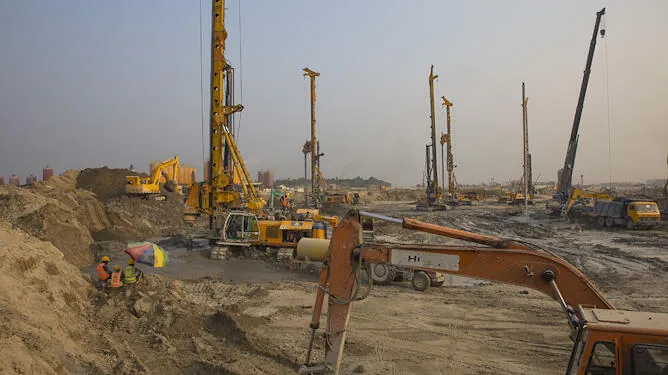
AETEK’s current focus on industrial business development between Europe and Central Asia did not begin with a new business plan. It is the result of more than two decades of building companies, entering markets, developing supplier relationships and learning how industrial business actually grows across borders.
When AETEK was repositioned toward Central Asia, it may have looked from the outside like a new strategic direction. In reality, it was much closer to a return to the core. The history behind AETEK reaches back to the late 1990s and is closely connected to the professional path of its founder, Artur R. Pamin. Over the years, the company names, locations and legal structures changed. The underlying activity, however, remained remarkably consistent: identifying business opportunities, connecting industrial suppliers with markets, building local structures and developing relationships until they became real business.
The first entrepreneurial steps
The starting point dates back to 1998, with the acquisition of the corporate vehicle of Thomas Duchnicki GmbH in Berlin (Thomas Duchnicki / WaWiSys (WarenWirtschaftsSysteme) GmbH, in Berlin, Gesellschaft mit beschränkter Haftung, HRB 53693 Amtsgericht Berlin Charlottenburg). At that stage, there was no concept called Business Development as a Service and no defined focus on Central Asia. What already existed, however, was the entrepreneurial idea of working independently across markets rather than remaining confined to one organisation, one territory or one conventional sales structure.
In 2002, this direction became more explicit with the establishment of PWT – Pamin Worldwide Trading in Aschaffenburg, Bavaria. The name itself reflected the underlying idea: international business was not understood as occasional export activity, but as the ability to connect supply and demand across borders. That principle would remain central throughout the following decades.
Moving closer to the market
A major step followed in 2008 with the establishment of PAMEL LLC – Памин Элемент ООО in Domodedovo, Russian Federation (Памэл, ООО, ИНН 5009067009 / КПП 500901001). This marked a shift from working with foreign markets from Germany toward building structures inside the markets themselves. The distinction is important. Exporting into a country and developing business inside a country are not the same thing. The latter requires an understanding of customers, decision-making structures, technical expectations, commercial behaviour, local networks and the often considerable distance between an initial contact and an actual order. This experience became increasingly important as activities moved deeper into industrial B2B markets.
In 2010, the involvement in ООО АЕТ-Техника added another dimension. The company operated in the field of industrial technology and represented European equipment and engineering solutions in Russian-speaking markets. The historical activities around AET-Technika already contained many elements that today would be described as industrial business development: representing technology suppliers, explaining technically demanding products, identifying potential users, developing customer relationships and bridging the gap between European manufacturers and industrial customers in another business environment.
In January 2013, AETEK GmbH was founded in Germany. This was not a departure from the previous activities. It was their consolidation. AETEK was created around industrial trade and procurement and increasingly became a platform for connecting European industrial technology with customers and projects in Russian-speaking markets. One year later, in 2014, this structure was extended through the establishment and participation in LLC АЕТЕК in Chimky, Moscow. The business model was becoming increasingly clear: Europe provided technology, engineering capability and specialised industrial products. The markets to the east provided industrial demand, projects and opportunities. Between the two stood the need for someone who understood both sides. Someone had to identify the opportunity, understand the customer, qualify the requirement, find the right supplier, translate commercial and technical expectations and accompany the process long enough for an actual business relationship to emerge. That intermediary function would later become one of the foundations of the modern AETEK model.
Building local industrial business
The next major step followed in 2015 with the establishment of URARUS LLC in Kazan, Republic Tatarstan, R.F. (see urar.us). URARUS represented a more advanced stage of the same development philosophy. Rather than simply exporting equipment, the objective was to build an operating market structure around specialised European industrial technology.
In 2017, an additional URARUS office was opened in Moscow. By then, the activities had moved far beyond conventional international trading. They included market development, representation, technical-commercial and technical-operative coordination and service, customer acquisition, project development, procurement and the continuous development of industrial relationships. This period provided one of the most important lessons that continues to shape AETEK today: Markets are rarely built by individual transactions. They are built through continuity. A manufacturer may have an excellent product. A potential customer may have a genuine requirement. Yet business still does not automatically happen. There is usually a long chain in between. This is precisely the space in which AETEK has operated for many years, even before that process was formally described as Business Development as a Service.
Central Asia becomes part of the business
From around 2018, industrial supplies and consumables were increasingly delivered not only into the established Russian-speaking markets but also to customers in Central Asia. At that time, Central Asia was still only one part of a wider regional business environment. Nevertheless, the foundations of today’s AETEK direction were already becoming visible. Kazakhstan, Uzbekistan and the neighbouring markets combined substantial industrial demand with a growing need for international technology, equipment, engineering and reliable cross-border business relationships. The region also demonstrated something that AETEK had already learned elsewhere: successful industrial business development requires more than finding a distributor or responding to an occasional request for quotation. Understanding the local industrial landscape matters. So do decision-making structures, project cycles, procurement processes, relationships and the ability to remain engaged over time.
A period of transition
The environment changed fundamentally after 2022. URARUS was moved into standby mode, and the previous regional business architecture could no longer simply continue as before. At first sight, this could be interpreted as an interruption. From today’s perspective, it was more accurately a transition. The accumulated experience remained: decades of industrial sales, market development, procurement, company building, customer relationships and work across different business cultures. What changed was the geography and the strategic framework in which that experience would be applied.
AETEK returns with a clearer focus. Beginning in 2025, AETEK entered a new phase. Central Asia moved from being one market among several to becoming the central strategic region. At the same time, the business model was refined. The objective was no longer to recreate a traditional representation structure or simply to act as an intermediary for individual transactions. The accumulated experience pointed toward a broader role. Today, AETEK develops business between European industrial companies and Central Asia through a combination of Market Intelligence → Market Access → Opportunity Development → Procurement → Execution → Market Building. This approach increasingly takes the form of Business Development as a Service – BDaaS.
For European companies, AETEK can provide a way to explore and develop Central Asian markets without immediately building their own local organisation. For Central Asian industrial companies and projects, AETEK can provide structured access to European technology, specialised suppliers, engineering capabilities and industrial partners. The emphasis is not on generating contacts. It is on developing business. Seen in this context, the present AETEK is not a new company trying to enter Central Asia. It is the latest stage of a business-development path that has been evolving since the late 1990s.
The next chapter
Central Asia is entering a period in which industrial development, critical raw materials, infrastructure, localisation and technology cooperation are becoming very important. European companies are looking for new markets and more resilient international partnerships. At the same time, Central Asian companies are increasingly looking beyond the purchase of individual imported products toward technology partnerships, local value creation and long-term industrial cooperation. For AETEK, these developments do not represent a completely new field. They bring together many of the elements that have shaped the company’s history from the beginning. What started with international trade evolved into market representation. Market representation evolved into business development. Business development evolved into market building. And today, those experiences come together in one clear direction: AETEK connects European industrial technology with Central Asia — and develops the relationships, opportunities and structures required to turn that connection into sustainable business.
- 1998
- 2002
- 2008
- 2010
- 2013
- 2014
- 2015
- 2017
- 2018
- 2022
- 2025
- now
IFAT Munich 2026: Central Asia Looking for Environmental Technology
IFAT Munich 2026, held from 4 to 7 May, was particularly relevant from a Central Asian perspective.
The region is facing a combination of challenges that are becoming increasingly difficult to separate: ageing municipal infrastructure, water losses, wastewater treatment requirements, growing waste volumes, recycling, industrial residues and the need to use resources more efficiently. These are precisely the areas covered by IFAT under its core themes of water, recycling and circularity. Around 3,400 exhibitors from more than 60 countries and regions presented technologies ranging from pumps, water and wastewater treatment to waste sorting, recycling, resource recovery and environmental engineering.
Central Asia was not absent from this discussion. A Kazakh delegation officially participated in IFAT Munich 2026, including the Chairman of Kazakhstan’s Centre for Modernisation and Development of Housing and Communal Services. According to Kazakhstan’s government, the delegation used the exhibition to engage with solutions in water supply, wastewater treatment, waste recycling, circular economy and resource efficiency. This is an important signal. For countries such as Kazakhstan and Uzbekistan, environmental technology is increasingly becoming part of the broader industrial and infrastructure modernisation agenda.
The opportunity is therefore not simply to export individual pumps, recycling machines or treatment systems. It is to connect specific Central Asian infrastructure needs with suitable European technology, engineering and implementation partners. For AETEK, IFAT represents exactly this supply side. Central Asia provides the demand: modernisation of water systems, wastewater treatment, waste processing, recycling and resource recovery. Europe provides a deep technology base.
The business-development task lies in bringing the two together around concrete projects rather than around products alone.
MiningMetals Uzbekistan 2025: A Market Moving Toward Industrial Depth
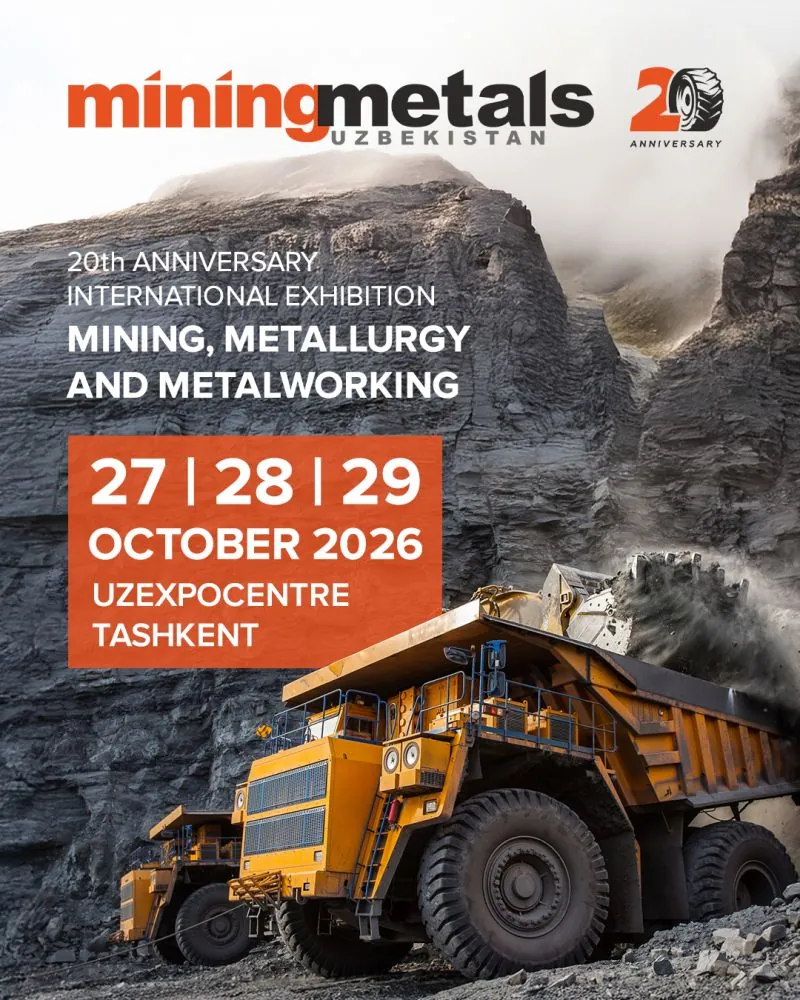
MiningMetals Uzbekistan 2025, held in Tashkent from 28 to 30 October, was more than another regional mining exhibition. As the 19th edition of one of Central Asia’s established mining and metallurgical trade fairs, the event brought together equipment suppliers, engineering companies, technology providers and industrial stakeholders around a market that is becoming increasingly important for international cooperation. The exhibition was accompanied by the 7th Uzbekistan International Mining & Metals Forum, supported by the Ministry of Mining Industry and Geology.
What is particularly relevant is the direction of the discussion. Uzbekistan is no longer focused only on extracting mineral resources. The country is increasingly developing processing, metallurgy, local production, modernisation and higher-value industrial chains around those resources. That development creates a broader demand for international technology: from mining equipment and conveying systems to process engineering, automation, water treatment, energy systems and specialised industrial services.
For AETEK, this is exactly where the market becomes interesting. The opportunity is not simply to bring another product into Uzbekistan. It is to understand where industrial investment is taking place, identify the real technical need and connect that demand with the right European technology and engineering partners.
MiningMetals Uzbekistan 2025 therefore reflected a wider shift already visible across Central Asia: from resource extraction toward industrial capability — and from individual equipment sales toward long-term technology cooperation.
From Alpine Engineering to Central Asia
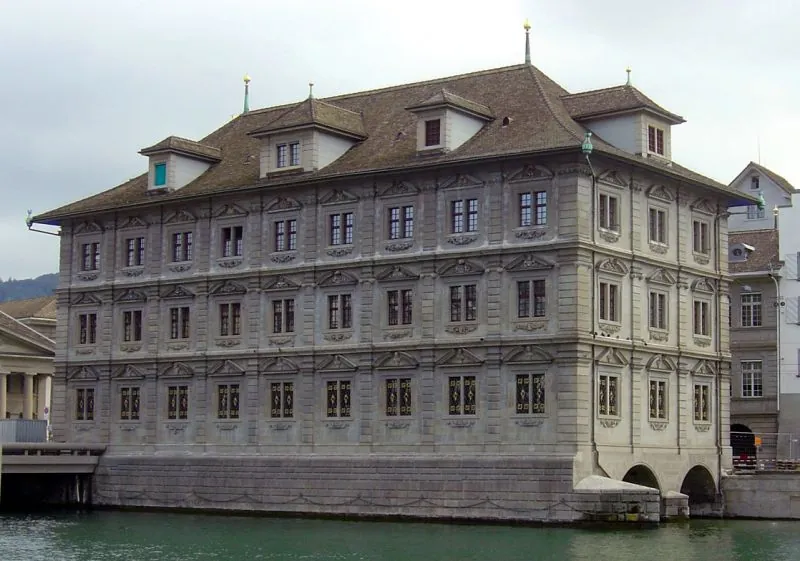
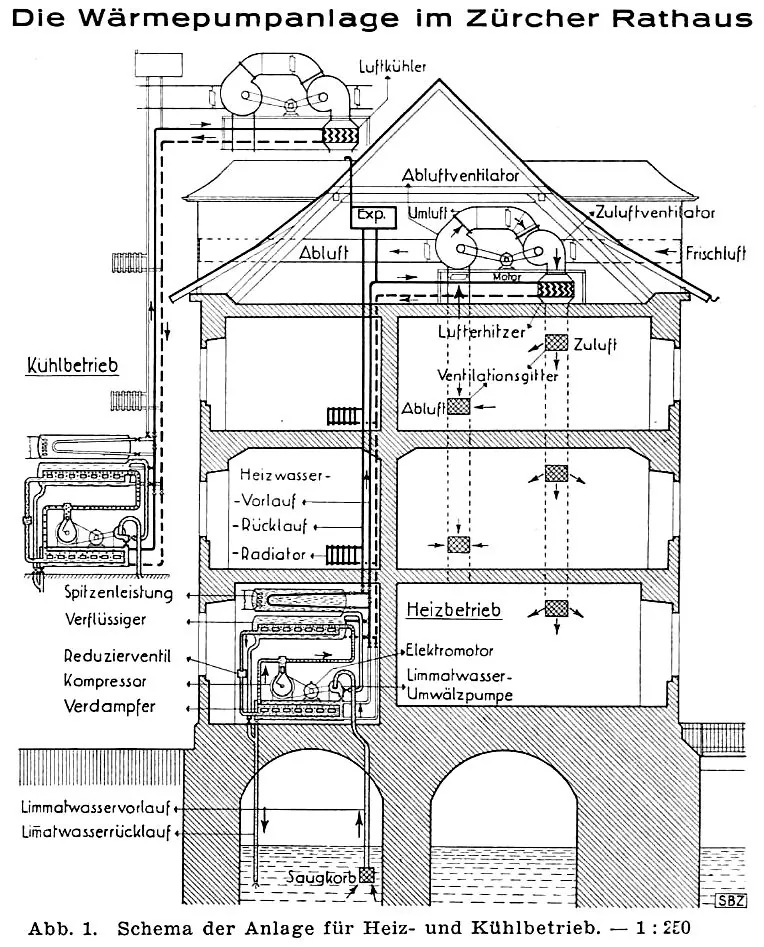
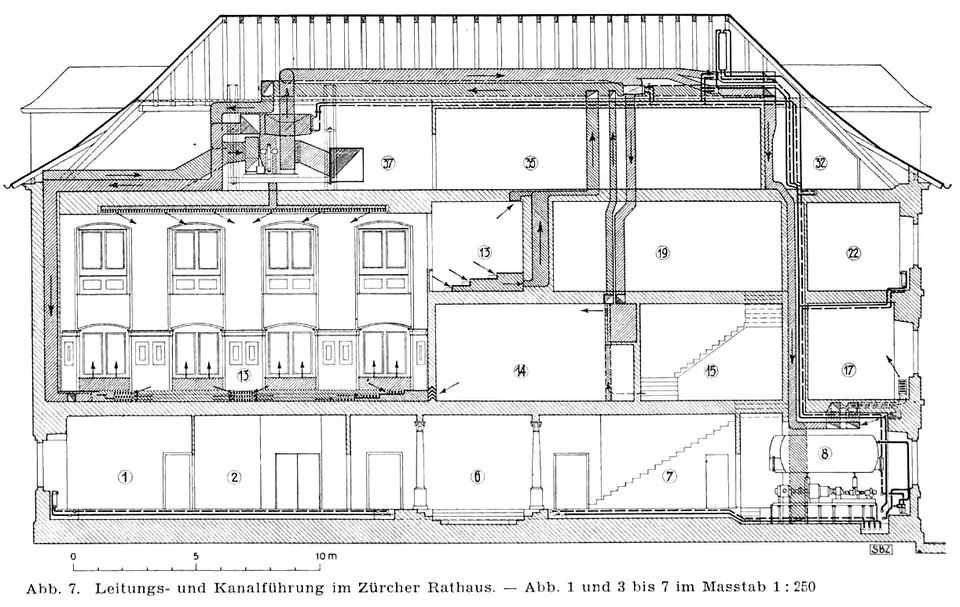
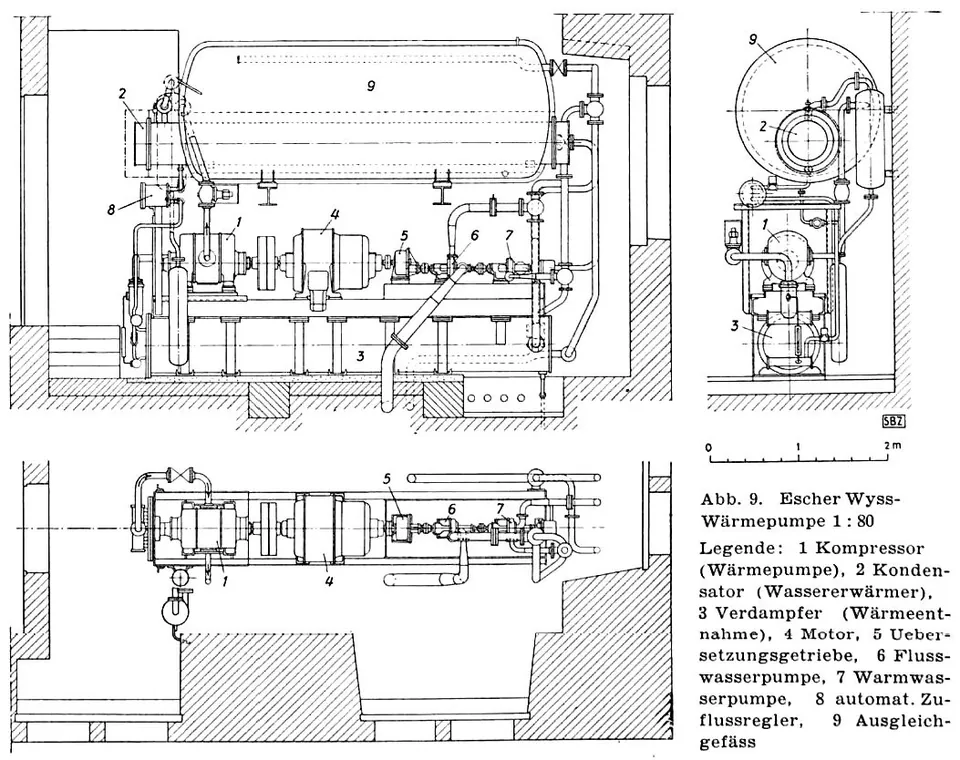
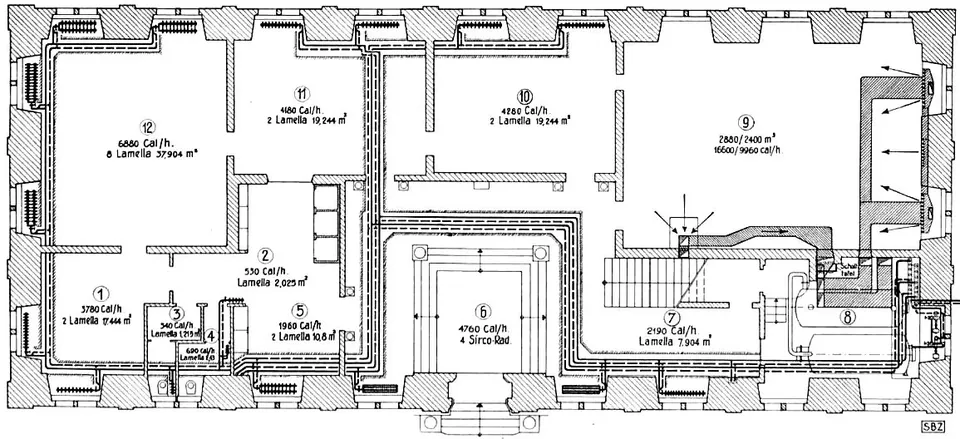
Some technologies appear new only because the market has finally caught up with them. Heat pumps are a good example. Several years ago, I came across a particularly impressive piece of engineering history.
In 1938, a water-to-water heat pump was installed in Zurich Town Hall. It used river water at an average temperature of around 7°C as its heat source and delivered approximately 100 kW of heating capacity with a flow temperature of around 60°C. Remarkably, the system remained in operation until 2012.
When I wrote about it on LinkedIn, I described it as impressive Alpine engineering for its time. What required pioneering engineering in 1938 can today be achieved with compact, highly efficient modern heat-pump technology. The underlying principle, however, has not changed.
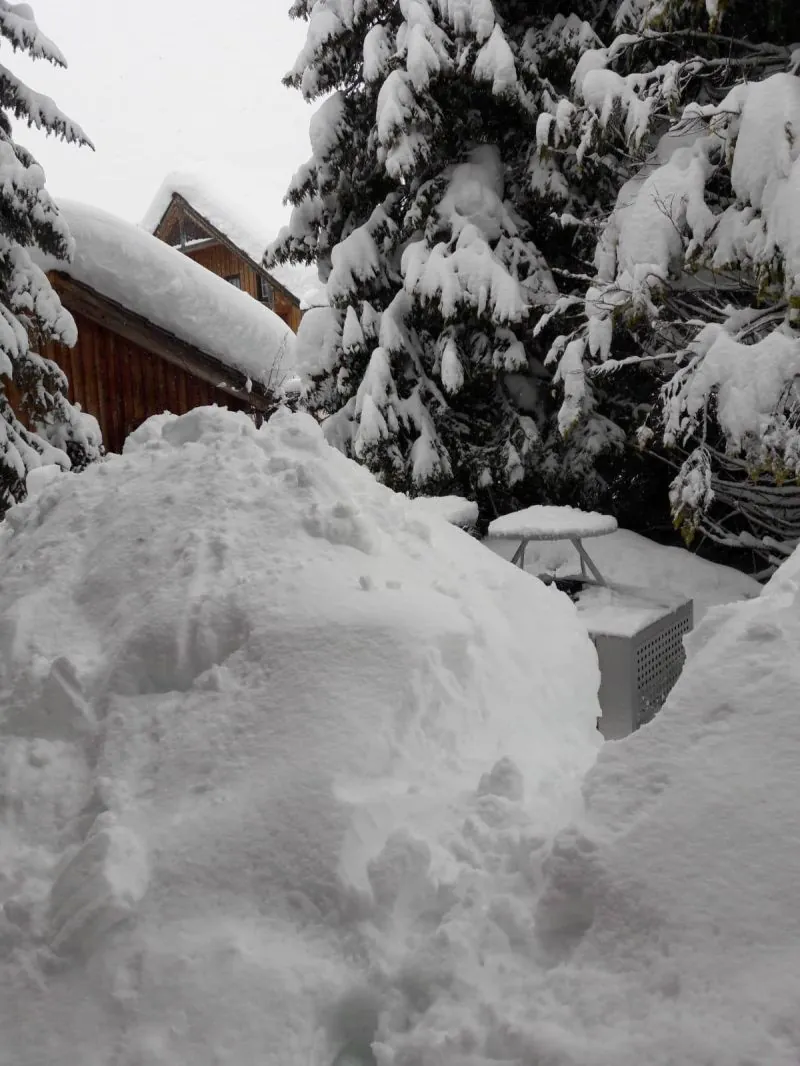
A heat pump does not primarily create heat. It moves energy that is already available in the environment — from air, groundwater, rivers, soil, wastewater or industrial processes — to a temperature level at which it can be used for heating, hot water or industrial purposes. That simple principle is becoming increasingly relevant in Central Asia.
A region with a significant heating challenge
Heating is one of the less visible parts of Central Asia's energy transformation. Much of the international discussion focuses understandably on electricity generation, renewable power, grid infrastructure and natural resources. But buildings consume enormous amounts of energy as well. And across large parts of the region, heating infrastructure is still characterised by older boilers, high network losses, inefficient buildings and systems designed during a period when energy efficiency was a much smaller consideration. This is beginning to change.
A particularly interesting signal appeared in Uzbekistan in September 2025.
On 3 September, Uzbekistan's National Energy Efficiency Agency, together with the Ministry of Economy and Finance and ILF Consulting Engineers, organised a specialist seminar in Tashkent on improving the energy efficiency of buildings. More than 150 specialists representing over 50 Uzbek design institutes participated. Among the technologies explicitly discussed were improved building envelopes, solar energy — and heat pumps. Similar training activities continued in Bukhara. This may sound like a relatively small event. In reality, it represents something much larger.
When engineers, design institutes, regulators and public institutions begin discussing a technology systematically, the market is moving from individual demonstration projects toward technical capability building. That is often the stage at which a technology begins to become part of normal infrastructure planning.
From individual systems to energy infrastructure
Heat pumps should also not be understood only as replacements for boilers in individual buildings. Their potential is considerably broader. Modern systems can make use of groundwater, wastewater, industrial excess heat, geothermal energy and other low-temperature heat sources that would otherwise remain unused. Research in Kazakhstan has already examined the application of heat pumps within fifth-generation district heating and cooling systems. A case study for the Northern Industrial Zone of Karaganda combines heat pumps, low-temperature district networks, photovoltaic generation and seasonal thermal storage while also considering the utilisation of waste heat from nearby infrastructure. This changes the perspective. The question is no longer simply: Can a heat pump heat a building in Central Asia? Technically, that question has been answered long ago. The more interesting questions are: Where is the most suitable heat source? Which buildings or industrial processes can use it? What temperatures are required? Can heating and cooling be combined? Can industrial waste heat be recovered instead of discharged? How should the system interact with photovoltaic generation, storage or an existing district-heating network? And finally: Does the complete system make technical and economic sense under local conditions?
Uzbekistan is beginning to create the framework
The institutional environment is moving as well. Uzbekistan introduced a new national energy-efficiency framework during 2025, including the creation of a National Energy Efficiency Agency and mechanisms intended to support energy audits, building renovation and technologies including heat pumps. A large programme now being developed for public buildings identifies heat pumps explicitly as one of the technologies that can replace inefficient fossil-fuel heating systems alongside insulation, modern HVAC and renewable generation. This is particularly relevant because schools, hospitals and other public buildings represent a large and often ageing building stock. It also suggests that the market opportunity will not consist only of selling individual heat pumps. There will be demand for: engineering, system design, hydraulic integration, energy-source assessment, building renovation, controls, installation, commissioning, service and financing. In other words, an ecosystem rather than a product.
The European connection
Europe has spent decades developing heat-pump technology for increasingly demanding applications. High-efficiency systems today operate with air, ground, water and industrial heat sources and can serve everything from residential buildings to commercial properties and large heating networks. But exporting European equipment alone does not automatically create a functioning heat-pump market. Local climatic conditions matter. Electricity prices matter. Existing heating-system temperatures matter. Building quality matters. Service capability matters. And the economics of replacing cheap natural gas or coal can differ significantly from those in Western Europe. That means technologies must be selected and engineered around the market, rather than the market being expected to adapt to the technology.
Where this connects with AETEK
For AETEK, heat pumps represent a good example of the type of industrial and infrastructure development we increasingly see in Central Asia. The technology itself already exists. European engineering expertise exists. The regional demand is emerging. What is often still missing is the structured connection between these elements. That connection can include identifying suitable projects, understanding the local technical requirement, finding the appropriate European technology or engineering partner, establishing access to decision-makers and accompanying the project beyond the initial introduction. This is where AETEK's role becomes relevant. Not as a heat-pump manufacturer. And not simply as an equipment trader. But as a business-development and technology bridge between European industrial capabilities and Central Asian demand.
The heat pump installed in Zurich in 1938 demonstrates how old the underlying engineering principle actually is. What is changing today is the environment around it. Energy efficiency, decarbonisation, industrial waste-heat recovery and the modernisation of heating infrastructure are gradually moving higher on Central Asia's agenda. And sometimes the technologies required for the next stage of development are not technologies that still need to be invented.
They simply need to be brought to the right market, applied to the right problem and integrated into the right system. That is where engineering becomes business development — and where proven European technology can become part of Central Asia's next generation of energy infrastructure.